At the start of each year, we dive into emerging trends in online community engagement, making predictions about what the next 12 months might bring. Now that 2024 is drawing to a close, it’s time to revisit those predictions and reflect on how they’ve panned out. By engaging with a broad range of clients, potential customers, and professionals across sectors—from local and state governments to industries and not-for-profits—we gain valuable insights into how community engagement is evolving and influencing decision-making processes.
Social Pinpoint’s close ties to the “frontline” help us spot trends early and anticipate shifts. Let’s take a closer look at how our top predictions for 2024 played out.
Here were our top five online community engagement predictions for 2024:
Hyperlocal Engagement
Elevated Data Transparency
AI Adoption at the Organisation Level
Community Empowerment in (Private) Digital Workspaces
Low Barrier Engagement
1. Hyperlocal Engagement
As mentioned in our 2024 community engagement trends blog, communities are becoming more familiar with public engagement. Since COVID, they have become increasingly hyperlocal in their thinking and acting.
In 2024, we predicted that organisations would need to adapt by offering tailored information and conducting consultations to better engage specific communities on hyperlocal projects.
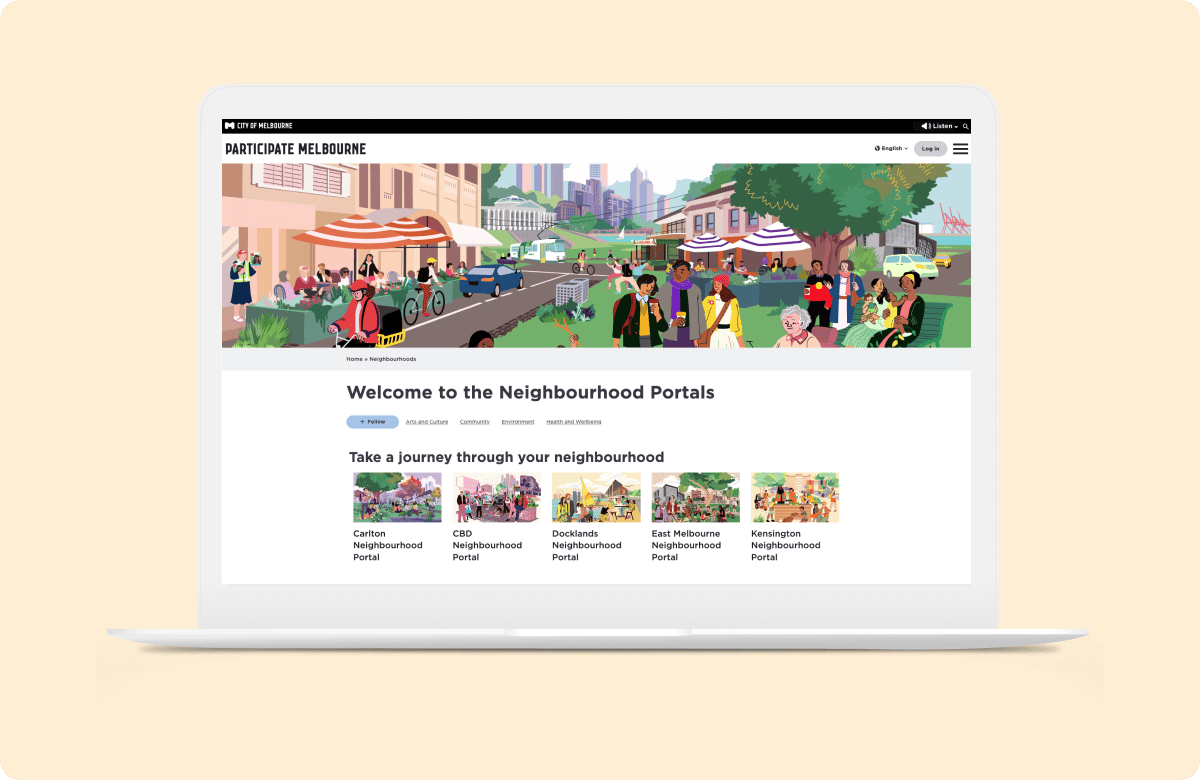
While we don’t think we’ve seen the biggest shift yet to hyperlocal consultations (e.g., at a street level), we have noticed a growing trend, particularly within local government in Australia. These organisations aim to help communities gain a clearer understanding of what is happening in their local areas while encouraging residents to participate in engagement activities to foster trust—giving people the chance to raise issues or questions with their local ‘neighbourhood officer.’
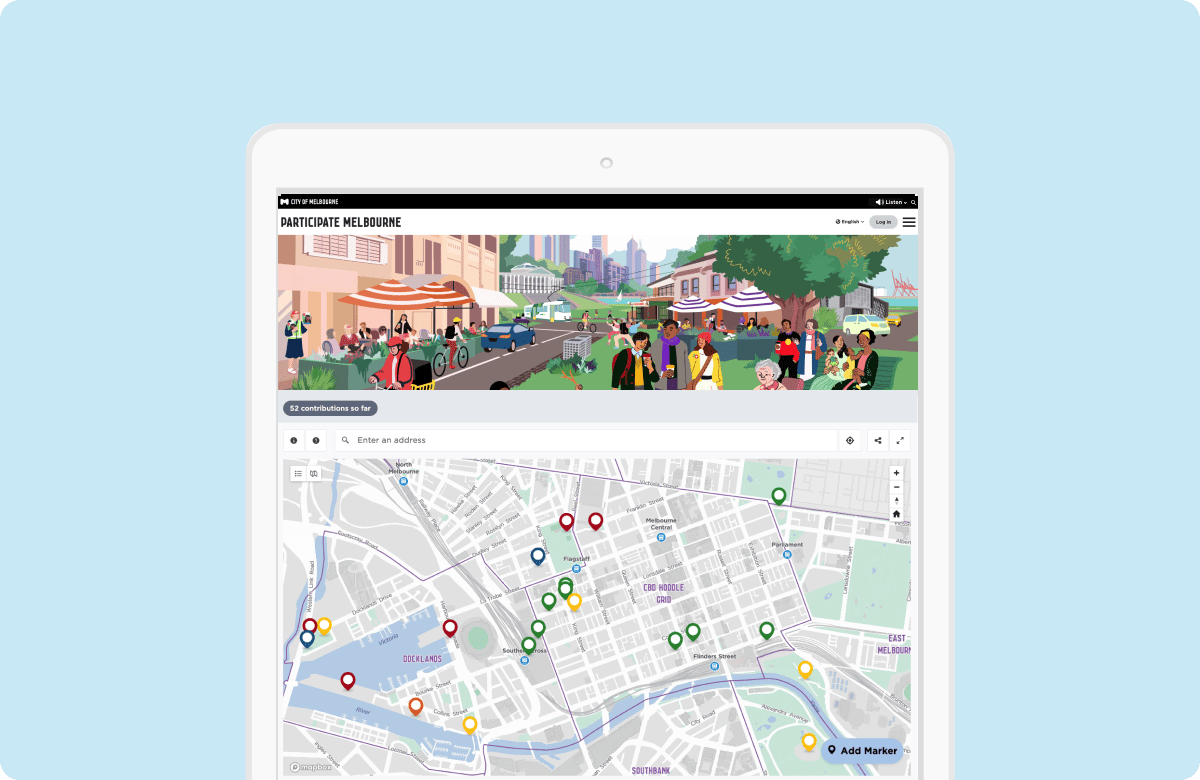
By using a digital community engagement platform like Social Pinpoint, several councils, including those from cities such as the City of Melbourne (VIC), City of Adelaide (SA), and City of Port Adelaide Enfield (SA), as well as regional councils like Alpine Shire Council (VIC) and Gladstone Regional Council (QLD), have embraced the growing trend of neighbourhood portals or community hubs.
This involves creating a project space dedicated to specific neighbourhoods, wards, or communities. In most cases, by using our Project Map tool, organisations can showcase projects happening in local areas and connect people with local staff, such as neighbourhood or placemaking officers working in those communities. This trend appears to have been initiated by the City of Melbourne, which uses ongoing data collected to create a knowledge database benefiting the entire city council.
2. Elevated Data Transparency
Similar to the above, while it’s difficult to observe publicly and at the scale we initially anticipated, we have seen a noticeable increase in requests for API access in Social Pinpoint. This helps organisations leverage and utilise the data collected on the platform in various ways.
Organisations in Australia, like the Cities of Melbourne and Casey are just a handful of Social Pinpoint users who have continued to access high levels of data via our open API. They use this data to feed into PowerBI tools, creating custom dashboards for internal use and charts on their project pages, particularly when closing the loop.
Reporting back after a consultation has closed—or ‘closing the loop’ as we affectionately call it—is certainly a big driver for this trend and is key for building trust. Customers like the City of Port Adelaide Enfield clearly highlight in their engagement summary reports, using the Facts tool, things like who they heard from, how many responses they received, the themes they took away from the data, and relevant quantitative data showing how decision-making processes were made.
While the Northern Beaches Council uses the data they collect to manually update a submission response number on open projects, which we think creates a bit of FOMO for those who have not yet participated, it also clearly shows the community the number of people they are engaging.
3. AI Adoption at the Organisation Level
We stated earlier this year that AI is here to stay and evolve, and so far, we believe we’re right. Following the rapid adoption in 2023, 2024 has focused more on strategising and asking key questions about who, what, why, where, when, and whether it is safe.
Organisations have been evaluating the risks and benefits of AI applications, with some of the groups we work with even developing policies to define what can and can’t be used, and for what purposes. Although we can’t see this publicly, we’ve observed it through the increase in requests to our support desks and customer success teams. These requests focus on how we’re doing with our products and AI, as well as which potential plug-ins are compatible with both Social Pinpoint and Consultation Manager.
We’ve seen a significant increase in product requests related to reporting options and how we’re adopting AI to enhance capabilities such as qualitative summarising, theming, and auto-tagging.
Without explaining too much, our product roadmaps for 2025 will focus on reporting, particularly within Social Pinpoint. This will likely include updates to features like our assisted analysis capability, as our Product Manager has recently spoken with several customers who emphasised the need to simplify their work processes.
4. Community Empowerment in (Private) Digital Engagement Workspaces
We predicted growth in open dialogue models being applied in both private and semi-private workspaces to facilitate citizen panels, strategic planning and budgetary processes. Again, while we can’t show you how this happens, as it’s private, we do know that the private and password-protected functionality in Social Pinpoint has seen a significant increase in use.
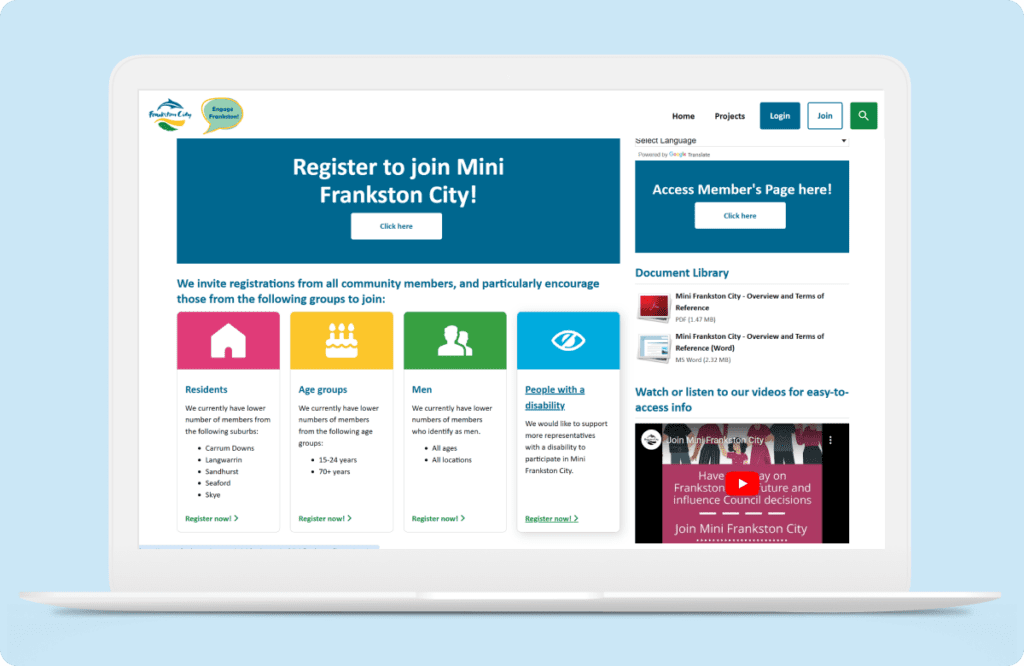
Mini Frankston City Initiative | Frankston City Council
We’ve seen many Social Pinpoint users continue to leverage private projects to create mini-collaboration and empowerment spaces that are specific to one issue or community group. This includes favourites like Mini Frankston City, a city-wide representative group to more specific use cases around drug and alcohol recovery groups with some of our Local Health District customers. We have also seen an increase in questions about how to do this from current and potential customers looking to add deliberative groups to their engagement processes.
The private functionality is also helping more customers support decision-makers within the organisation. We’ve specifically heard from councils using it with newly elected members and landscape boards/natural resource management boards using it with their elected boards. This is important as it means users can share data from public consultations within one system easily and also have decision-makers use tools the community members are using for public participation.
5. Low Barrier Engagement
At Social Pinpoint, we expected this to be a trend in 2024, and we were certainly right. Organisations have shaken of the shackles of the last few years under COVID restrictions and have started to offer a much wider array of ways to engage—not just online. This mixture of digital, hybrid, and in-person engagement options, and indicating how much time each will require, has helped lower the barrier to entering a community engagement process.
We have seen more projects using timing on their digital tools, as well as advertising events such as pop-ups, where those with more time or those who prefer face to face interaction can come along and have their say on the project that interests them.
There’s been a growing trend towards presenting bite-sized, relevant information to help people quickly grasp the key aspects of a project, without the need to download large, cumbersome documents. The use of design tools that enhance the flow of a project page, such as our Block Quote tool (used in innovative ways to guide the narrative), is becoming increasingly popular. Additionally, short video introductions have also gained traction as an effective way to engage audiences and provide an overview of a project.
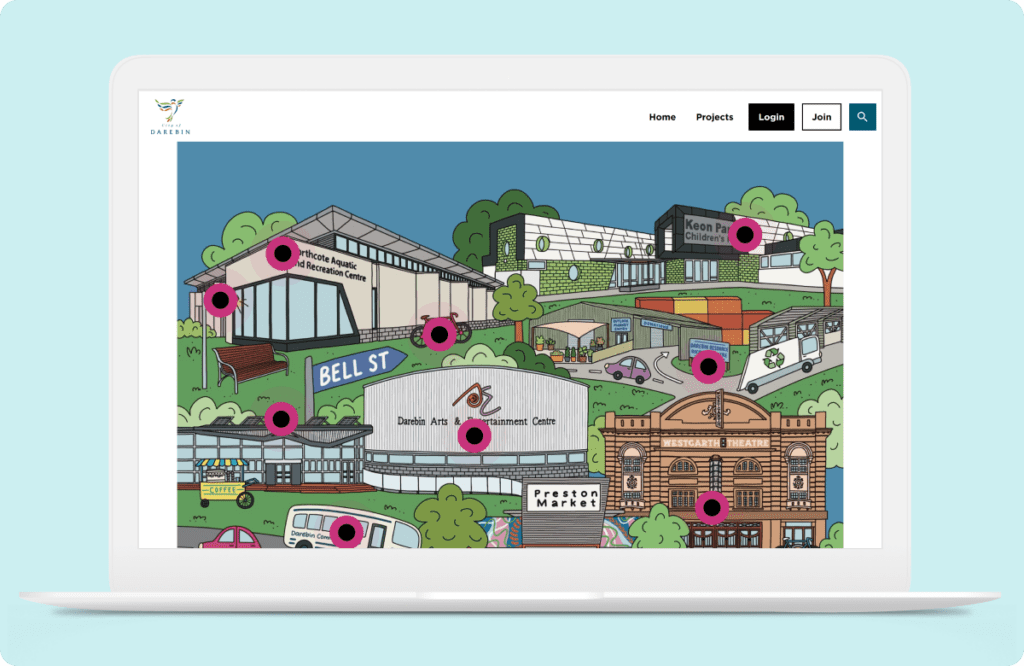
Community Vision Review Initiative | City of Darebin
This is clearly demonstrated by the City of Darebin’s Community Vision Review, where they utilised one of our coaching sessions to enhance the project’s user experience. The artwork on their site was created specifically for the project and is featured in the project banner, video flows, hotspots, and the survey
By using the Tabs and the Block Quote tool, we get great flow through the project, while Darebin also offered those in the community several low-barrier options to get involved. You can read a case study about this project, showcasing how our coaching sessions helped show a positive impact by increasing and empowering meaningful engagement.
Final Reflections
While not every prediction hit the mark, many of the key trends we anticipated have become more evident in 2024, contributing to the success of community engagement efforts. Hyperlocal engagement and greater data transparency have gained significant traction, with initiatives like neighbourhood hubs and visual ‘closing-the-loop’ projects helping to empower communities and build trust.
Though some trends, particularly those in private digital workspaces, remain difficult to fully validate publicly, we’re confident these shifts are taking shape. As we look ahead, it’s clear that the landscape of online community engagement continues to evolve, and these trends will play a crucial role in shaping the future of how we connect, collaborate, and make decisions together.
We are in the enviable position of collaborating with hundreds of organizations worldwide and innovating together to drive community and stakeholder engagement forward. Our clients range from local and state governments to industry and nonprofits that use and rely on engagement in their decision-making processes. This experience allows us to take a pulse of engagement strategies and outcomes across a variety of fields and reflect on emerging online community engagement trends for 2024.
Here are our top 5 online community engagement predictions for 2024:
Hyperlocal Engagement
Elevated Data Transparency
AI Adoption at the Organization Level
Community Empowerment in (Private) Digital Workspaces
Low Barrier Engagement
1. Hyperlocal Engagement
Communities are very familiar with public engagement, and since COVID, they have become increasingly hyperlocal in their thinking and acting.
In most cases, this would be defined along the lines of geography. For example, a street, a neighbourhood, and a suburb. But it could extend to digital groups such as defined groups, panels, and boards. Organizations will need to and are adapting to this shift with appropriate information and consultations targeted at specific communities on hyperlocal projects.
For example, most local governments across Australia run tree planting schemes on a street-by-street basis where old trees and non-native species are replaced – this is known as Street Tree Renewal projects. Usually, the engagement around this is specific to the residents of that street only where trees are being replaced. This process limits the local government to maybe a handful of streets a year if they follow a process of mail-drop, feedback, and tree planting one street at a time.
By using a digital engagement platform like Social Pinpoint, consultations like this can be run concurrently or consecutively at a very hyperlocal level to scale engagement. These spaces can be built out to discuss and help local governments manage the process in an agreeable timeline, collaboratively with their communities.
Resort Municipality of Whistler, Canada | Municipal Facilities Feedback
An example from Canada, the Resort Municipality of Whistler is hosting two tandem engagement projects – one more general and one hyperlocal. The more general project is collecting broad feedback on Municipal Facilities, while the more focused and hyperlocal engagement is collecting feedback from youth and parents surrounding a specific Youth Centre. By dividing these into separate consultations, they’ve been able to create engagement strategies that reflect the need to bring younger and more diverse voices into decision-making processes.
City of Melbourne, Victoria | Neighbourhood Portals
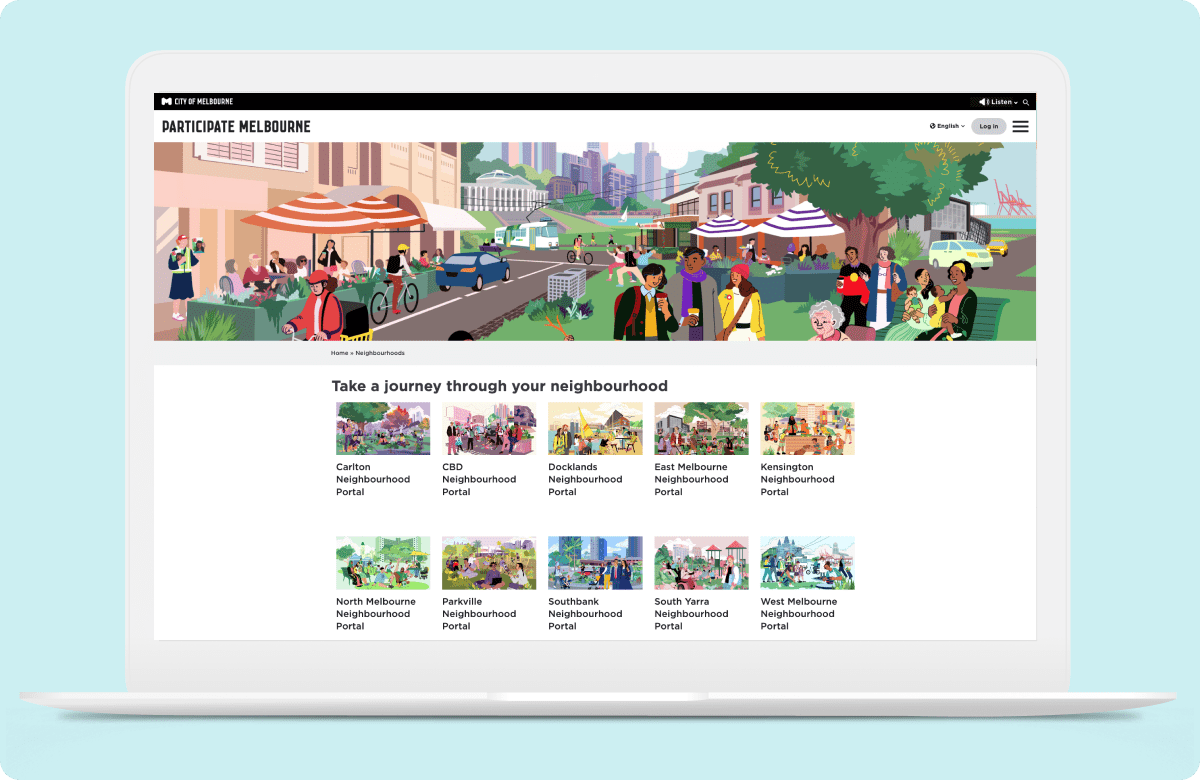
At the City of Melbourne, hyperlocal has been on the agenda for a while now. Their Neighbourhood Portals allow community members to find projects in their neighbourhood and provide feedback using a variety of tools, including adding comments on maps. The data collected is then fed into a knowledge database for the various City of Melbourne staff teams to access and benefit from in the long term. This helps to cut down on engagement fatigue and repetitive questioning. In some cases, we know it has also had a big impact on giving a participation boost to ‘less attractive’ projects by associating them with the ‘more attractive’ ones.
City of Melbourne, Victoria | Urban Forest
Likewise, the City of Melbourne’s Urban Forest project has focused on reviewing Urban Forest Precinct Plans as implementation guidelines that underpin their wider Urban Forest Strategy. The 10 very specific precinct levels are where people can provide hyperlocal feedback by commenting on a Social Map. The project started in 2023 and will continue at least until 2025.
2. Elevated Data Transparency
Similar to the above, we’ve seen a growing expectation from the public for transparency on how their input is being actioned. They’re asking for greater detail on how engagement data is analysed and used for smarter decision-making. They want to feel that their opinion is valued.
Today, organizations are receiving larger data sets, not just from traditional in-person activities, but also digitally from platforms like Social Pinpoint and social media. With that, managing data has become increasingly important and using the data appropriately even more so.
Many organizations use tools, like Consultation Manager, to track stakeholder interactions in one place, cross-reference data across projects and use data beyond a single project. At the project level, they use Social Pinpoint to further analyse sentiment using AI, create thematic word clouds and highlight comments using visualization tools like maps, charts and graphs. The recent integration between these two solutions is helping engagement professionals save time and take their analysis to the next level. Still, others are turning to dedicated BI tools using our open API.
In Australia, the Cities of Melbourne, Wyndham and Casey are just a handful of Social Pinpoint users now accessing high levels of data via our open API to feed into PowerBI tools to create amazing custom dashboards for internal use and charts, some even sharing live feedback with their communities. This use case is on the rise as organizations want to show how data is working for them and their community.
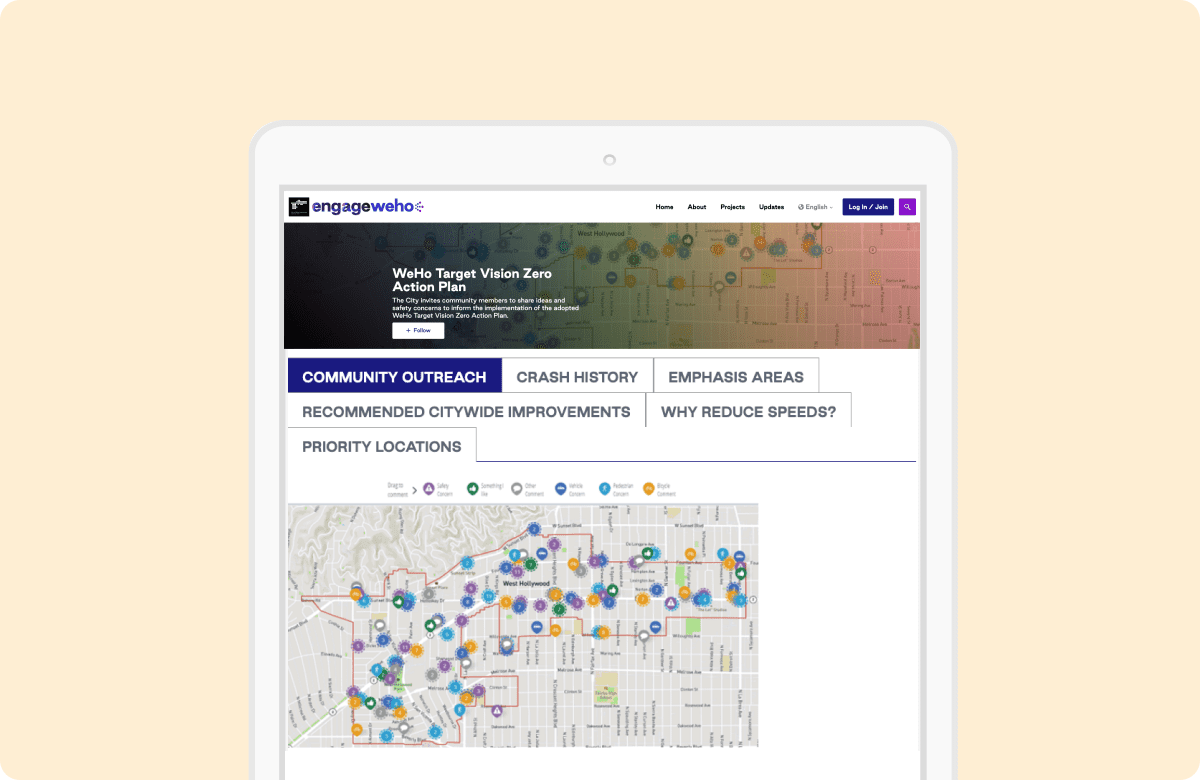
West Hollywood, California | Target Vision Zero Action Plan
Having recently completed the public feedback portion of their Target Vision Zero Action Plan, the City of West Hollywood in California is now using its Social Pinpoint project page to close the loop and push the results and conclusions from that feedback back to the public. With an overview of the process, they use Social Pinpoint’s Tabs tool to break down their feedback into easily digestible sections. For example, under the Community Outreach tab, they use a screenshot of their final Social Map and under the Crash History tab, they review historical data.
While the plan has now been adopted by the City, they are still encouraging anyone who lives, works or spends time in West Hollywood to review the plan and provide feedback. This ongoing feedback will inform the next stage and the implementation of the proposed safety improvements recommended in the plan.
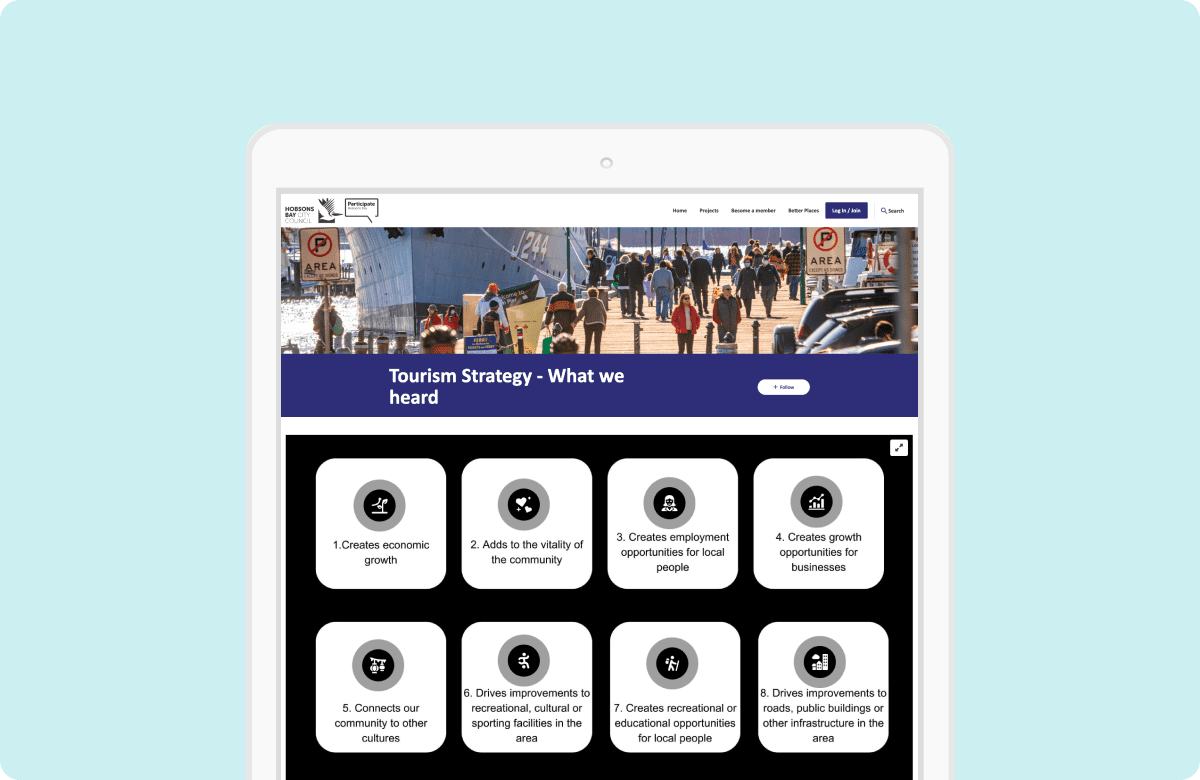
Hobsons Bay City Council, Victoria | Tourism Strategy
In 2024, we will certainly see more organizations transparently sharing engagement results online, like Hobsons Bay City Council. They close the loop on projects using a variety of content tools, likeFacts andHotspot in their Social Pinpoint toolkit, to share what they heard back to the community. They also use the data beyond the single project to promote smarter use across projects.
We are already seeing growth in data transparency and smart use this year, whether it’s sharing data internally for others to benefit from across departments (like the City of Melbourne’s, Neighbourhood Portals) or by including older yet still relevant data in project decision-making.
3. AI Adoption at the Organization Level
AI is here to stay and grow, hopefully with us. In 2023, early adoption was all about the ‘wow’ and exploring what AI could do for us as individuals. We saw no formal training, no rules and quickly developing products. Now, as we move into 2024, what we predict is that the ‘wow’ factor will fade and we’ll see serious adoption to enhance speed and efficiency at the organizational level.
Organizations have been working to explore the organizational risks and benefits of applications like ChatGPT and Dall-E, slowly trying out different systems and prompts to improve internal processes around survey writing and data analysis.
While data privacy and reputational risk remain major stumbling blocks to more mainstream application of AI in government, we anticipate that organizations will spend the next year developing robust internal systems and norms to establish acceptable use of these tools specific to the government context and even choosing preferred tools and creating “closed loop” AI systems.
The intersection of AI and community engagement offers a promising horizon. AI introduces efficiencies, personalisation and data-driven insights that can redefine the participation experience. Yet, balancing this technological prowess with the intrinsic human touch that has always underpinned interpersonal relationships is crucial. For more, see our blogs on ‘Will AI Replace Community Engagement’ and ‘10 Ways to Use Artificial Intelligence (AI) in Community Engagement’, including a downloadable prompt guide below.
For AI to be used responsibly and ethically in a way that fosters positive and inclusive community engagement, organizations will need to create systems that ensure data privacy, avoid biases in AI algorithms and maintain transparency. It will be interesting to examine the differences in how different parts of the world, with varying data protection laws, approach the normalization of AI tools – perhaps a topic for next year’s trends article.
4. Community Empowerment in (Private) Digital Engagement Workspaces
“Empower” has now been on the IAP2 Spectrum for 34 years and in 2024, we expect social empowerment in digital engagement workspaces will become more popular as a tool to aid deliberation, collective impact and ongoing relationship building. In particular, we predict growth in open dialogue models being applied both in private and semi-private workspaces to facilitate citizen panels, strategic planning and budgetary processes.
We’ve seen many Social Pinpoint users leverage private projects to create mini-collaboration and empowerment spaces that are specific to one issue or group. This can range from a birdwatching group to a greenway cleanup coalition, to a collection of nonprofits working in refugee resettlement.
Our Recovery is an example of a semi-private workspace hosted on Social Pinpoint – it combines public-facing transparency about members and the work of various groups. It facilitates private discussion spaces that empower those committees to work together during recovery after a natural disaster, using a place-based, community-led approach to ensure projects, grants and support programs developed are the right fit for the community.
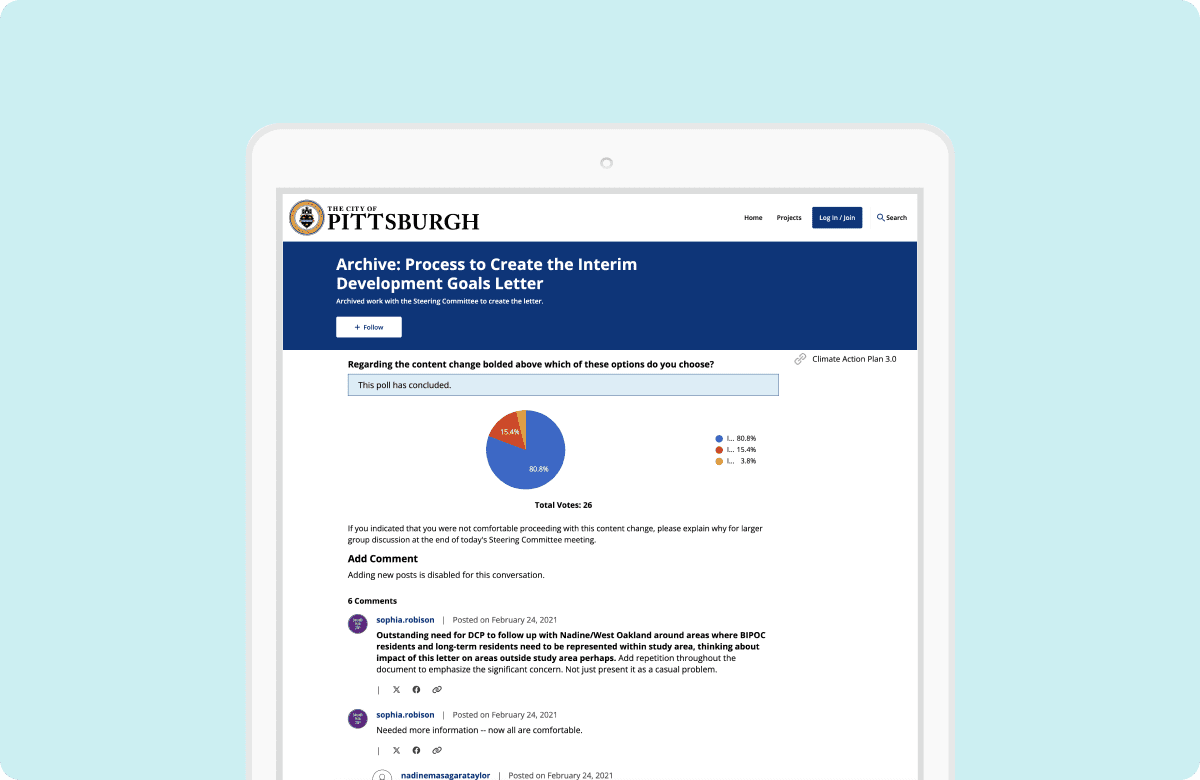
City of Pittsburgh, United States | Oakland Plan
5. Low Barrier Engagement
This is a trend that has slowly been gathering steam globally over the last few years and covers the ability to offer your community the opportunity to engage in a project with little barrier to participation but maximum impact. In digital engagement, this means creating a pathway for engagement that reduces clicks, offers rapid feedback opportunities and avoids text-heavy documents. The idea is that you can carve out a path to engagement that reaches those who have very little time or capacity and a parallel path for those who have more time or capacity – yet both sets of input are aggregated and equally valued in the final decision-making process.
At Social Pinpoint, we see an increasing number of organizations designing participation strategies in this way and we expect this to trend up in 2024. Organizations will, for example, offer different digital, hybrid and in-person engagement options and indicate how much time each will require.
If you have 5 minutes, leave an idea via theVisioner board;
If you have 15 minutes (or more!), visit us in person at the pop-up at this place, on this date and at this time.”
There’s also an opportunity here to use various content tools to break down large text-based documents into bite-size relevant information to help people access the key elements of a project without the barrier of needing to download a heavy-weight document. A popular tool being used here is theFacts Card.
In 2024, we think we will see a big increase in the skill of producing low-barrier engagement. The ability to offer participants a choice of engagement opportunities based upon their self-determined interest and capacity is not an easy thing to do or manage, but an important part of bringing in more diverse voices. With the support of a high-level Customer Success Team, like the one at Social Pinpoint, we anticipate a move away from the question-heavy survey and associated survey fatigue and a shift towards more deliberative and interactive tools likeGather andSocial Map.
What do you think? Were we right with our review of 2023 in part one, and do you think our predictions for 2024 will be correct?
Before we look forward and reveal our predictions for the top 2024 trends in online community engagement, let’s look back. 2023 was the year that saw some very clear trends, especially in the digital community space. We saw hybrid engagement come of age, we saw really clear stages in engagement, and we even saw the rise of AI. Below, we’ve listed the five trends we have mapped as the top 2023 online community engagement trends.
The Solidification of Hybrid Engagement
Staged Engagement
Community Development and Going Beyond the Project
Participatory Budgeting
The Initial Adoption of AI in Community Engagement
1. The Solidification of Hybrid Engagement
We predicted this two years ago and it was certainly de rigueur for most when planning community engagement over the past year. Various forms exist, but many projects showcased a mix of online and offline engagement strategies.
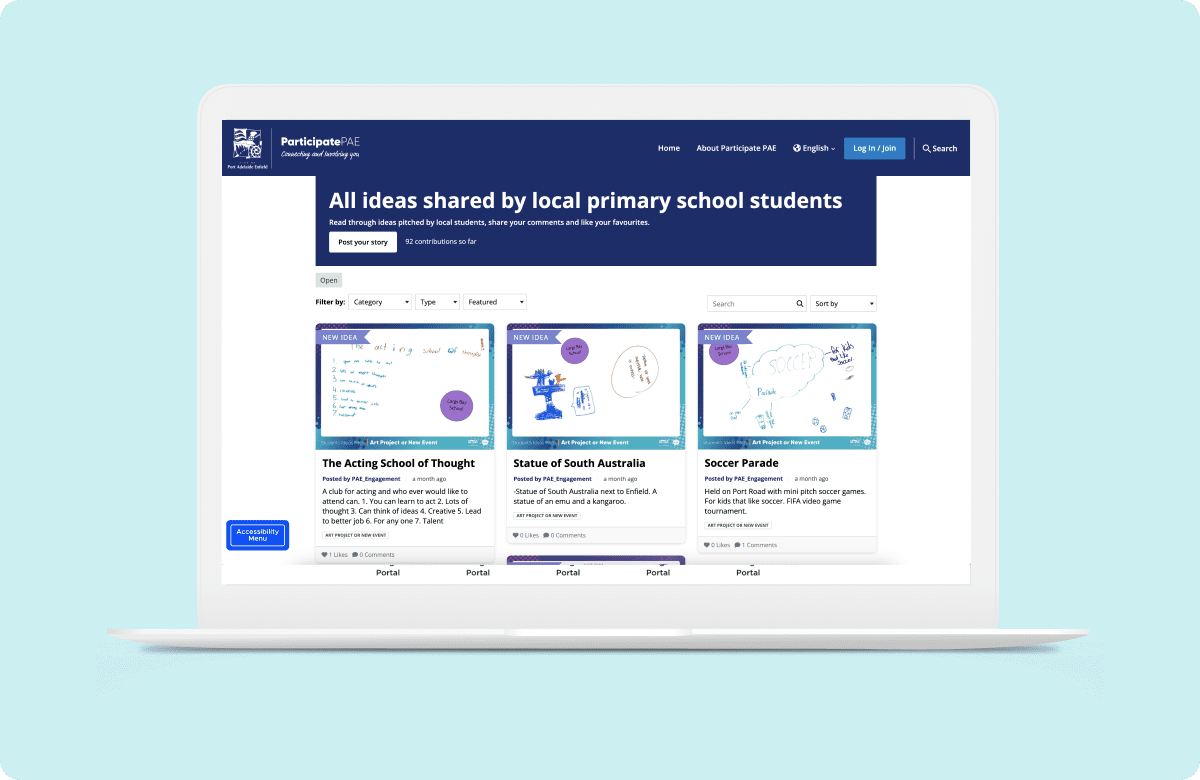
City of Port Adelaide Enfield, South Australia | School Idea’s Pitch Project
The City of Port Adelaide Enfield represented this trend well with their ‘School Idea’s Pitch’ Project, which saw students act as elected members and make mock Council decisions on various issues offline. Their ideas were then shared online for community comment and support through upvoting, with some ideas being taken to the Council’s chamber for discussion. This was a great way to get younger members of the community engaged in what local government does at an early age and a good example of the value of hybrid engagement.
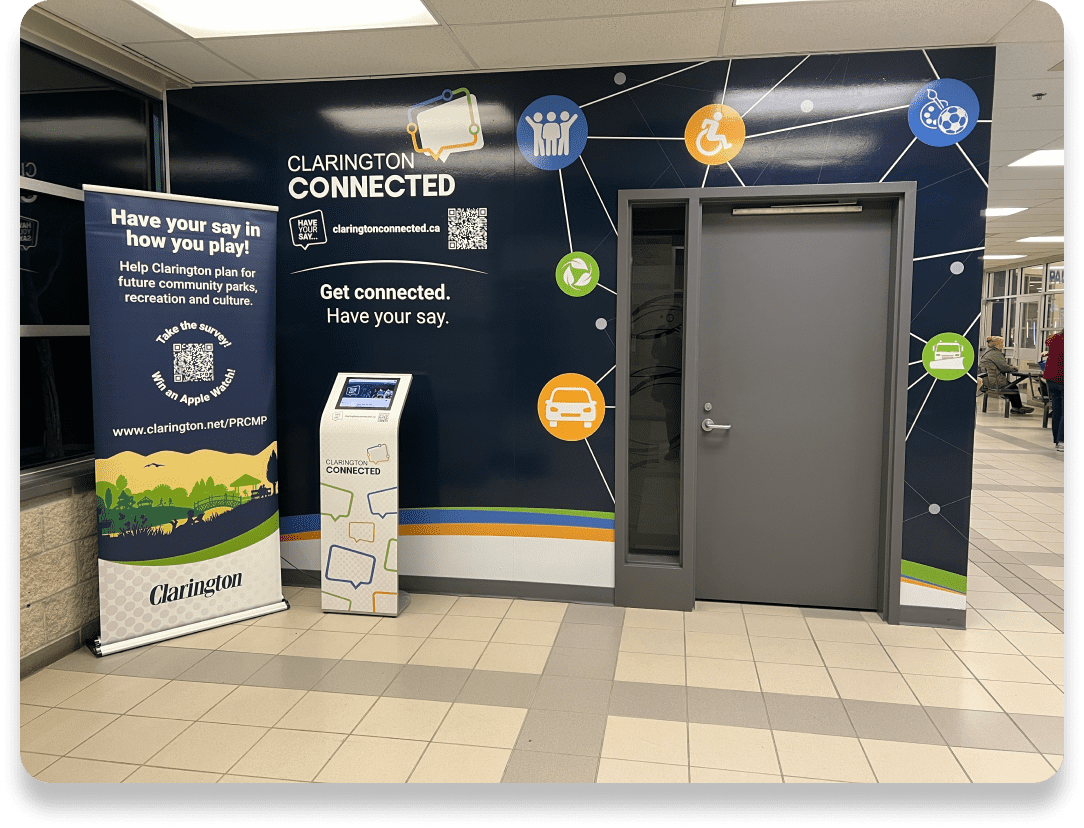
City of Clarington, Canada | Parks, Recreation and Culture Master Plan
On the Canadian side, Clarington in Ontario implemented a robust hybrid engagement strategy for their Parks, Recreation and Culture Master Plan, which included pop-up open houses around town, online meetings at various times of day, asynchronous digital engagement surveys, and even in-person kiosks at City Hall. The kiosks in particular saw great positive feedback on bridging the digital divide and high levels of engagement throughout the second half of 2023. It will be exciting to see how the kiosks are used going forward, and how peer municipalities learn from Clarington’s example.
2. Staged Engagement
When we say staged, we don’t mean fake news. Instead, what we mean are consultations with multiple stages of engagement from early engagement, even pre-engagement, through to closing the loop. Using a digital engagement platform makes staged engagement even easier and facilities a more robust process.
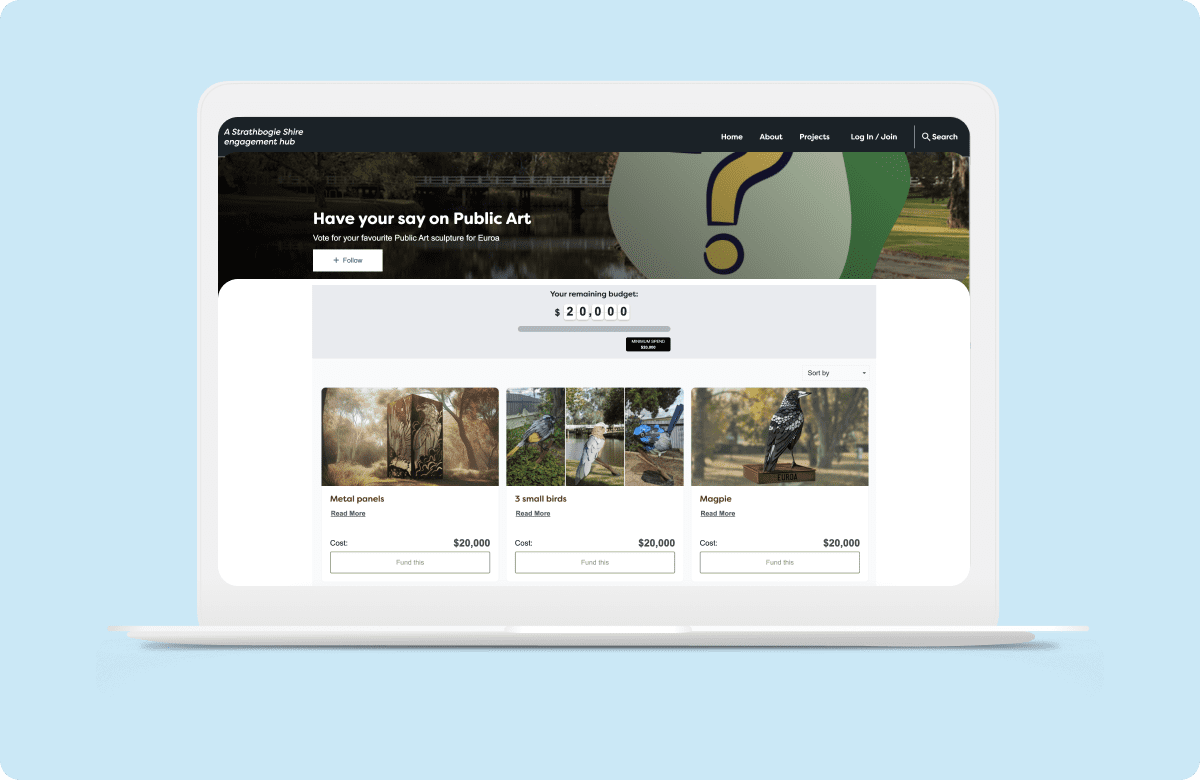
Strathbogie Shire, Victoria | Public Art Project
This was perfectly presented in Strathbogie Shire’s ‘Public Art’ Project, which started with pre-engagement to engage the community before the project had officially begun to see what community members were feeling, and ended with closing the loop to ensure that the participants were able to see the results of the project once it was concluded and so they could see their influence on the outcome.
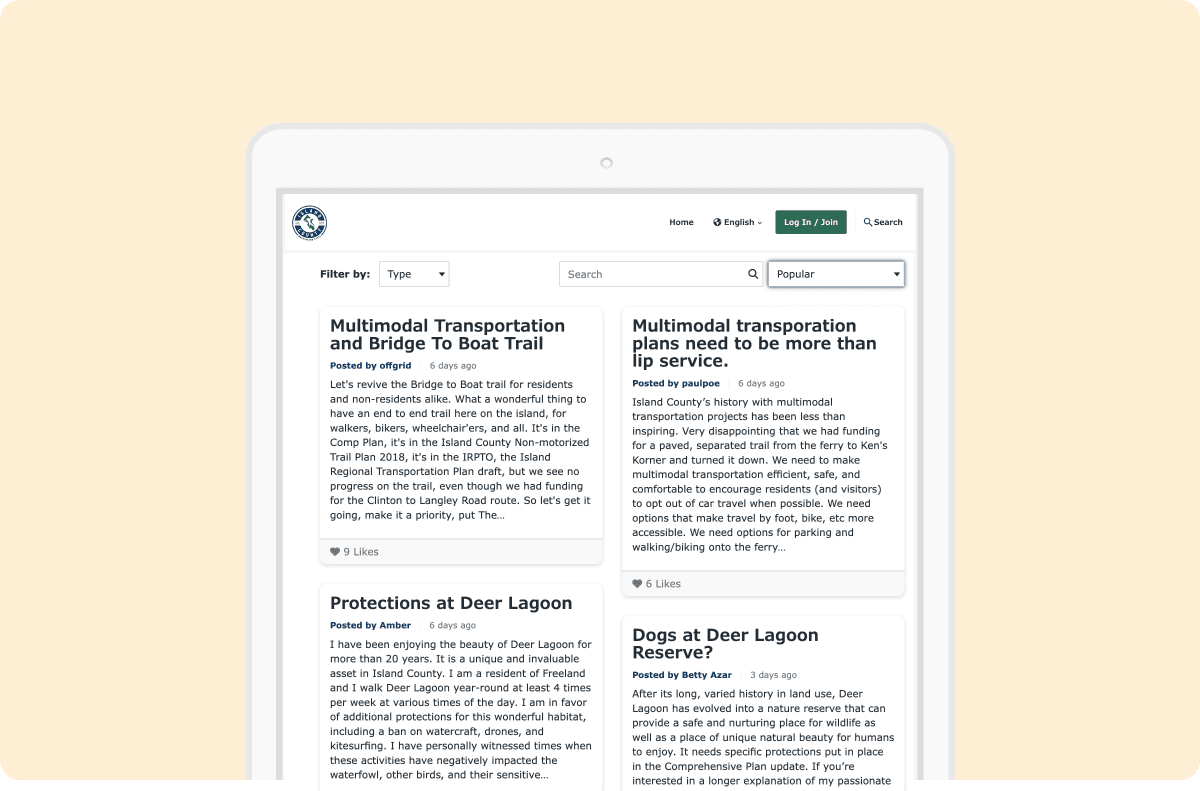
Island County, Washington | Comprehensive Plan
With large and long-term planning projects, a similar goal can be achieved by using the same project space over time. Island County, Washington (USA), recently launched their Comprehensive Planning process with the intention of collecting ideas in the visioning stage, before later moving into the plan development stage. This will allow participants to influence the process while it’s still being developed and to find upcoming engagement opportunities both in- person and online.
3. Community Development and Going Beyond the Project
Late in 2023, at a conference in Canberra one of the speakers said, “people don’t live in projects, they live in places.” We couldn’t agree more. In the online space, what we have seen in the last year is the ‘traditional’ online community engagement starting to go beyond the project and transitioning to include more ongoing relationship and community development type projects. This will certainly continue into 2024 as it adds more value to the online space and also helps maintain and engage the online community.
City of Port Adelaide Enfield, South Australia | Get Shady Project
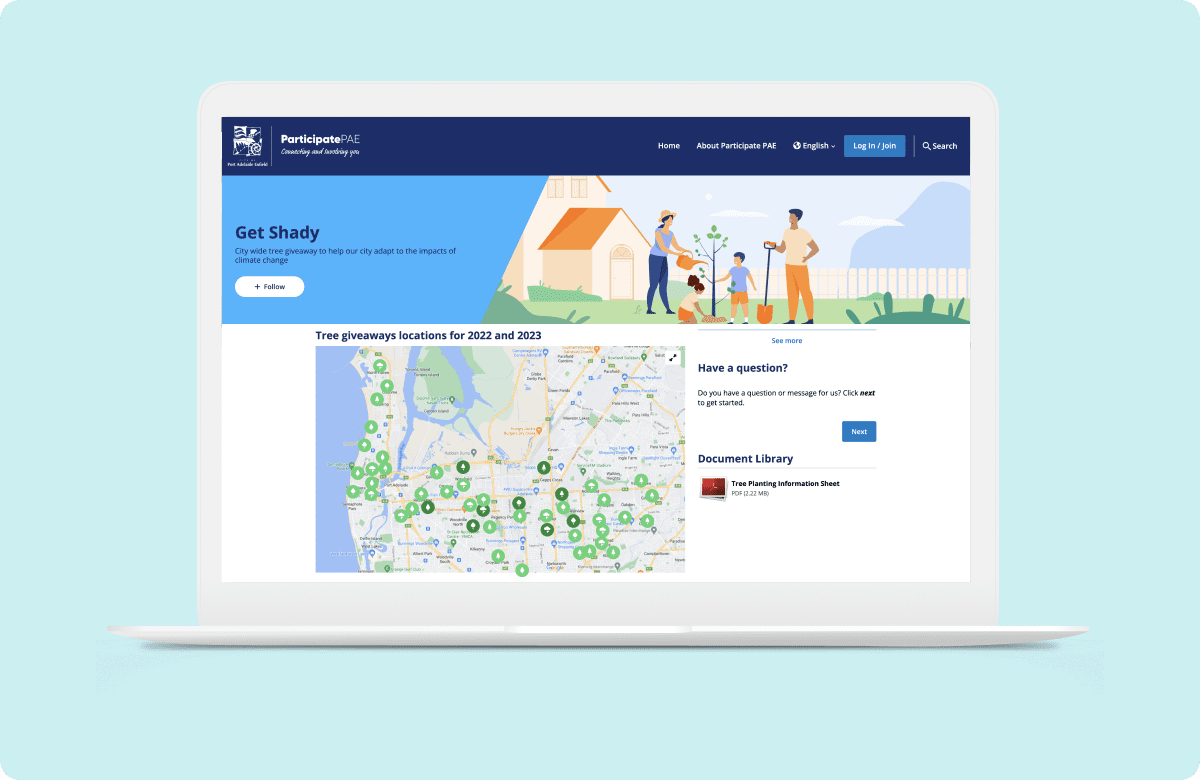
In 2023, a stand out project in Australia was the City of Port Adelaide Enfield’s ‘Get Shady’ project which engaged the community long term to distribute over 3000 native species of trees to help create a shade canopy to tackle climate change. This simple yet important project has helped the local government develop its relationship with the community on an issue that is on everyone’s minds while not providing a strict timeline.
Village of Deforest, Wisconsin | Birds of Deforest and Houses for Them
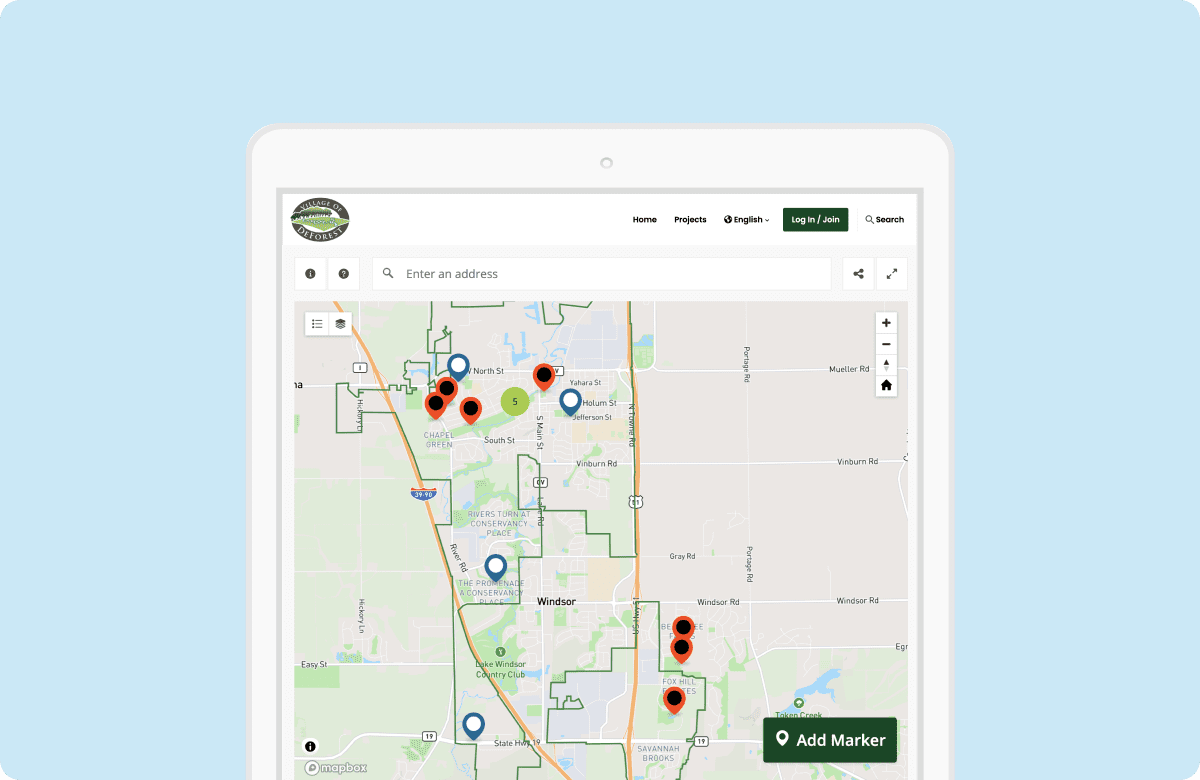
We also saw elements of this ‘beyond the project’ style work in North America in towns like Deforest, Wisconsin, where they are using Social Pinpoint to capture community spirit and a little bit of Citizen Science around birdwatching and acknowledging the role of community advocates to preserve and support this activity.
4. Participatory Budgeting
Participatory Budgeting started in Brazil in the 1980s, and it was used across Europe as a recovery tool to the Global Financial Crisis (GFC). It is now growing in use throughout Australia and North America. It’s not surprising that we are starting to see a big increase in the use of Social Pinpoint’s Fund It tool.
Now a popular tool, Fund It is certainly seeing more use in local government budgeting processes. It’s also often used in funding community projects; for example, participatory budgeting and tradeoff exercises can be used to engage the public in choosing everything from building elements of playgrounds and dog parks, to voting on the final designs for public art and mural projects.
Bayside City Council, Victoria | Library of Things
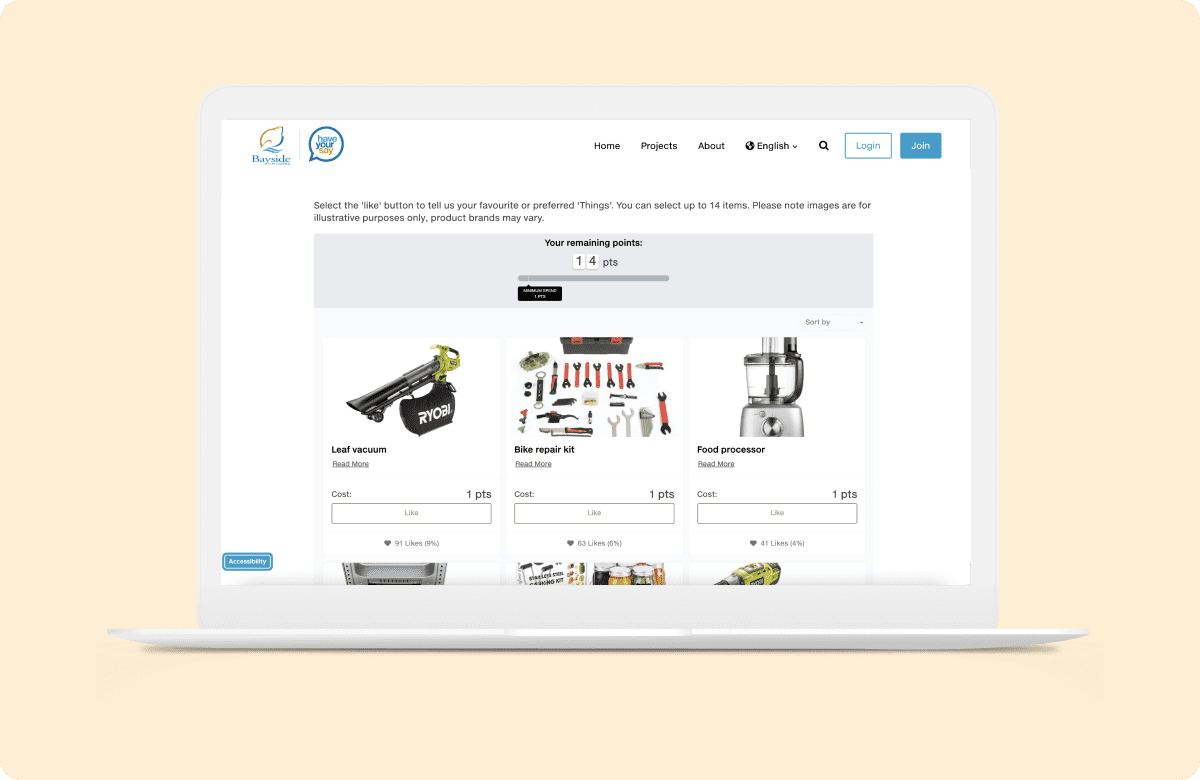
A favorite of ours is Bayside City Council’s ‘Library of Things‘ because it encapsulates the local government’s desire to spend public money on items for the library, like lawn mowers and kitchen utensils. But it takes away the stigmatic cost element by first asking the Community to choose items using points in the Fund-it tool and secondly by asking them to provide their own ideas via the Gather tool. While there is no project decision here to be made, the community is using participatory budgeting to own its Library of Things.
In Monterey, California, they deployed the Fund It tool to assess community values around distribution of housing units (instead of dollars or points!). The question posed was: “We need to accommodate X many additional housing units in Monterey over the next X many years, how would you distribute those units among the following neighborhoods?” The Fund It tool gave project managers space to explain the tradeoffs involved in choosing different neighborhoods while still keeping the budgeting exercise simple enough to be accessible to a broad cross-section of interested community members.
5. The Initial Adoption of AI in Community Engagement
While we are only just really learning the possible impacts (good and bad) of AI in community engagement, ChatGPT set the world alight earlier in 2023 with talk of how AI could help us with our everyday lives. If you attended any conference between September and December 2023 in the community engagement space, you would have surely encountered at least one workshop, session or keynote on the subject. Earlier last year, IAP2 North America even hosted a six-part series on the role of AI in public participation while at least three sessions at the IAP2 Australasian Conference were about AI.
What we have learnt is that there are both advantages and disadvantages to early adoption with AI. Speed and efficiency are great at an organizational level; however, the human element is often critical in a community engagement context, and data privacy and reputational risk must be carefully considered in the deployment of AI tools. Are your communities and stakeholders ready for it, even if you are?
We were excited to see these trends advance the field of community engagement in 2023. While some of these trends, such as hybrid engagement, continued to build from previous years, we expect many of these trends, like the growth of AI, will certainly continue to take shape into 2024.
In a recent study released by the Australian Bureau of Statistics in October 2023, it was revealed that 42.9% of Australians aged 16–85 had experienced a mental health disorder at some point in their lives. Specifically, within the last few years, predominantly during the pandemic years from 2020 to 2022, it indicated that 21.5% of individuals aged 16–85 had a 12-month mental disorder, while 37.9% had a selected physical condition. Comparing this to the 2017-18 data, there was an increase from 20.1% to 17.5% in 2014-15 for Australians with a mental or behavioural condition.
Concerning this surge in mental health disorders, we spoke with a well-known mental health agency to understand the implications for engagement levels between individuals and agencies post-pandemic.
When it comes to mental health engagement, a local focus is preferred. Those accessing mental health services tend to favour local services with regional knowledge, often avoiding online relational engagement tools. Mental health services predominantly engage online by sharing resources and facilitating support groups, including reference groups comprising individuals with specific mental health conditions and groups involving their families and caregivers.
Present engagement activities primarily involve surveys conducted by various agencies, while face-to-face grassroots engagement occurs at the local level through offices, established meeting places, or social media where data management and analysis are challenging.
Despite agencies utilising social media for organic content and advertising outreach, engaging service users with privacy and confidence remains a challenge.
Considering the ongoing outreach, feedback, and engagement, why not explore the use of a digital engagement platform to consult individuals, involve groups, and promote resources and outcomes from these collaborations, especially at a local level?
Five Benefits of Utilizing Digital Engagement for Mental Health Professionals
Here are five benefits of utilizing digital engagement for professionals in the mental health field when the focus is on staying local:
Enhanced Local Connections
Increased Accessibility
Tailored Support Services
Reduced Stigma at a Local Level
Collaborative Local Initiatives
1. Enhanced Local Connections
Digital community engagement facilitates mental health professionals in establishing stronger connections within their immediate geographical area. This approach fosters a sense of community and solidarity, exemplified by the City of Melbourne’s successful Neighbourhood Portals on Social Pinpoint.
Peer Support Groups – Facilitating online peer support groups where individuals can connect, share experiences, and provide mutual support. Peer support has shown to be effective in reducing feelings of isolation and promoting a sense of belonging.
2. Increased Accessibility
Digital community engagement platforms broaden the reach of mental health professionals, connecting with a more diverse audience locally. This accessibility extends support to individuals who may face barriers to traditional in-person services due to geographical limitations or disabilities. Social Pinpoint’s bespoke translation tool enhances engagement diversity across different languages in your locality.
Crisis and intervention resources – Ensuring that the platform includes easily accessible crisis intervention resources, such as helplines and mental health crisis services is vital. Having immediate access to support in times of crisis is crucial.
3. Tailored Support Services
Professionals can use digital engagement platforms to collect local information, offering support services and resources tailored to the unique needs of their community. Social Map simplifies data collection for a more effective understanding of local challenges.
Interactive Assessments and Screening Tools – Include evidence-based mental health assessments and screening tools to help individuals self-assess their mental health. These tools can guide users to appropriate resources based on their needs.
4. Reduced Stigma at a Local Level
Engaging with digital communities allows mental health professionals to address stigma directly. By participating in local conversations about mental health, they can break down stereotypes and promote open dialogue, ultimately reducing stigma on a community scale. Social Pinpoint’s Conversation tool facilitates open discussions in groups or privately.
Psychoeducational resources – Provide evidence-based psychoeducational resources on various mental health topics. This can include articles, videos, and infographics that offer practical tips and information for managing mental health challenges.
5. Collaborative Local Initiatives
Digital platforms provide a space for mental health professionals to collaborate with local organizations, government agencies, and community leaders. This collaborative approach ensures that solutions are well-suited to the local context. Social Pinpoint’s Private Project functionality allows professionals to work together confidently before launching any initiatives.
Community initiatives – Engaging the community in collective challenges or initiatives that promote a sense of unity and purpose. Collaborative efforts can contribute to a supportive community environment.
In summary, digital community engagement offers mental health professionals a range of benefits, including enhanced local connections, the ability to tailor support services, reduced stigma at a local level, collaborative local initiatives, and targeted outreach and services. These advantages empower professionals to make a significant impact on the mental health and well-being of their local communities.
As the festive season dawns upon us, it’s tempting to assume that community engagement should take a back seat while individuals revel in the holiday cheer away from home. Community engagement during the holidays goes beyond decorations and celebrations; it’s about building connections and plans that last. Therefore, it’s precisely during this time of joy that nurturing engagement becomes even more vital.
Let’s explore how community engagement can be adapted during the festive period, considering the travel and festivities that often pull residents away from their usual life cycle routines.
Three Strategies for Festive Community Engagement
In the spirit of the holiday season and nurturing connections, here are three strategies that can be utilized to boost your upcoming community engagement for the festive season.
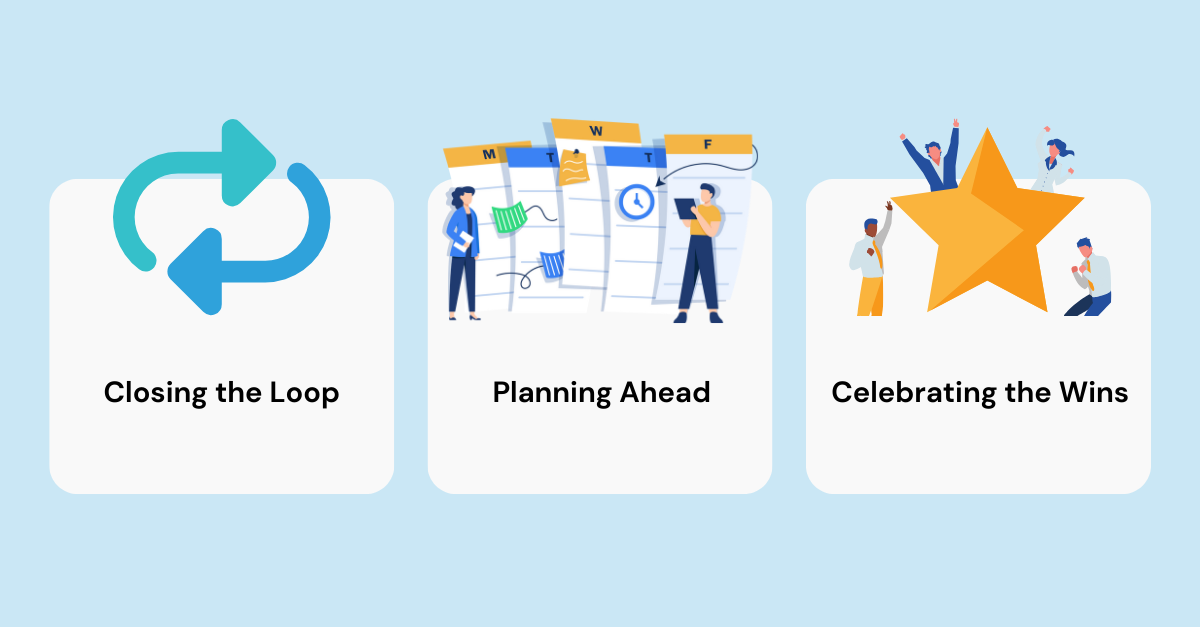
Closing the Loop
Planning Ahead
Celebrating the Wins
1. Closing the Loop
Closing the loop in community engagement involves creating a feedback system that ensures once everyone’s voice has been heard, they get to hear how their input has influenced an outcome. The festive period often brings a sense of reflection, making it an ideal time to address projects that have advanced or closed throughout the year.
By actively closing the loop on community feedback, residents will feel valued and heard, fostering a stronger sense of belonging. With Social Pinpoint and Consultation Manager’s in-built emailer, you can use it to showcase all the excellent projects that you have closed, much like a family Christmas newsletter.
2. Planning Ahead
While the festive season is a time for joy and celebration, it’s also a crucial period for planning your community engagement initiatives for the year ahead. Therefore, use this time to gather input on potential projects from colleagues around the organization, possible events you could support, and improvements that can be made from what you have learned in the past 12 months.
Hosting visioning sessions or collaborative workshops both with colleagues and community groups can help identify community priorities. Planning ahead not only ensures a smoother execution of future initiatives but also demonstrates a proactive commitment to better community engagement.
By utilizing the data you have collected on tool use and participation levels in Social Pinpoint and/or reports on issues learnt and interaction types in Consultation Manager, planning how best to engage next on that sticky upcoming project should be well informed and easier than pulling a Christmas cracker when the time comes to deliver.
3. Celebrating the Wins
Reflecting on the achievements and positive changes within the community after a successful project is essential for morale and motivation not only for the community who participated but also the staff that have spent many hours planning, executing and delivering. Take the time to celebrate the wins, both big and small.
Whether it’s completing a project, reaching an engagement goal, or fostering positive stronger and bigger relationships, ensure you acknowledge and share these successes. Celebrating these wins not only boosts morale but also inspires a sense of pride and accomplishment, encouraging continued active participation. With over 30 content tools in Social Pinpoint, showing these wins off in a high visual and active way is simple. It’s like putting the icing on the Christmas cake.
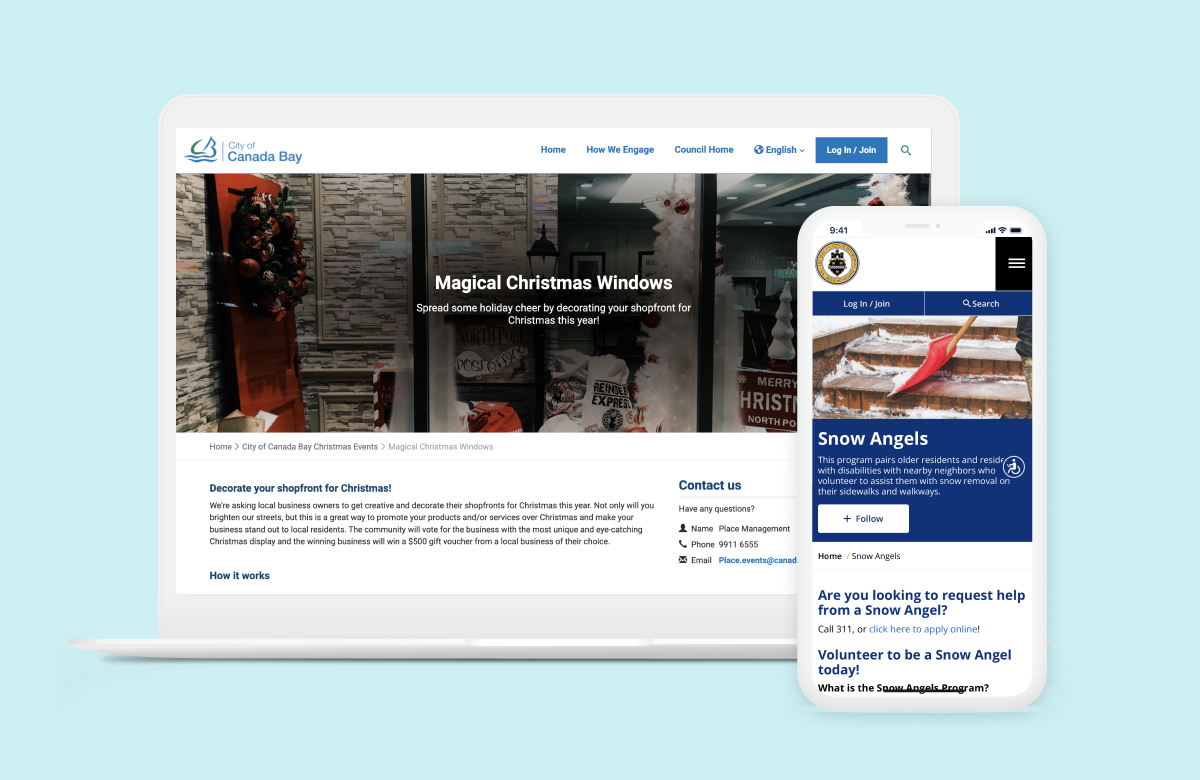
As we immerse ourselves in the festive spirit, let’s not forget the power of community engagement. While we certainly don’t advocate doing any engagement over the Christmas period – unless it’s something fun like City of Canada Bay’s Christmas Window competition or helpful like City of Pittsburgh’s Snow Angels, using this time for closing the loop on feedback, planning ahead for the future, and celebrating the wins are three key components that can elevate your practice during this joyous season.
By fostering connections, being actively prepared for the next 12 months, and recognising achievements, organisations and communities can lay the groundwork for a thriving and engaging future together. Happy holidays!
Artificial intelligence (AI) is already being used in community engagement across various industries and sectors. The intersection of AI and community engagement offers a promising horizon. AI introduces efficiencies, personalization, and data-driven insights that can redefine the participation experience.
Artificial intelligence (AI) involves using computers to do things that traditionally require human intelligence. AI can process large amounts of data in ways that humans cannot.
The goal for AI is to be able to do things like recognize patterns, make decisions, and even judge like humans. Or, even sing like Johnny Cash – an AI-generated cover of Cash singing Barbie Girl has recently gone viral.
AI is even changing how we make decisions. My Netflix always seems to know exactly what I should watch next and my Spotify recently introduced me to my own AI DJ (it’s actually pretty good).
Currently, AI is the very foundation of software we use every day, such as sentiment analysis or content moderation. And, it’s poised to have a significant impact on community engagement.
Using AI in Community Engagement
For community engagement, AI opens up a world of efficiencies and extra assistance, allowing you to keep more of a pulse on the community voice. So, how should you be using AI in your community engagement initiatives?
1. Personalized Content and Communication
AI can analyze vast amounts of data to understand individual community members’ preferences and interests. With this information, AI-powered platforms could deliver personalized content and communication, ensuring that each community member receives relevant information, updates, and messages.
2. Analytics Assistance for Better Insights
AI can process and analyze large datasets from various sources, including social media, surveys, and user interactions. This data analysis can provide you with valuable insights into member behavior, preferences, and trends, helping you to tailor engagement strategies accordingly.
Social Pinpoint’s Analysis Assistant processes large volumes of qualitative, unstructured data in real-time with machine learning. This means you can instantly uncover sentiment, themes, and insights from your engagement data.
3. Social Media Listening
Platforms such as Brandwatch and Meltwater provide social media listening capabilities so you can consistently monitor mentions of your organization online. Driven by powerful AI models, social listening allows you gauge shifts in public sentiment, identify emerging topics or themes, and respond promptly to negative publicity.
4. Community Management and Moderation
AI can assist community engagement teams in monitoring and moderating online discussions. It can identify and flag inappropriate or harmful content, ensuring that your community engagement platform remains a safe and respectful space.
User-generated images and videos can also be filtered by AI to detect inappropriate or harmful content such as nudity, violence, gore, hate symbols, or illegal activities.
Social Pinpoint utilizes powerful anti-SPAM technology to automate moderation and keep undesirable content from appearing on your site.
5. Content Creation
With AI content creation tools, you can generate written or visual content based on text prompts. Specifically, these AI tools, such as ChatGPT, Jasper and ClickUp can create engaging, relevant, and human-like content like articles, social media posts, and even videos.
This means you can help keep members informed and engaged while saving a lot of time finessing content. Some engagement platforms, such as Consultation Manager, even embed these tools to allow users to take advantage of advanced technology and speed up tasks such as image creation.
However, understanding the types or prompts and inputs to provide these tools can be a steep learning curve. Recently, our team created a ‘ChatGPT Cheat Sheet for Community Engagement’ so you can get started on utilizing AI to streamline content creation.
6. Enhanced Community Support
Humanized chatbots and virtual assistants can provide real-time support to community members, addressing their queries and concerns promptly. With a well-programmed and maintained chatbot, you can easily improve your overall community support experience and ensure members can feel heard.
FranklyAI is a great example of a platform that actively listens by conducting user-led discussions. It’s much more conversational than the standard chatbot as its programmed to the needs of your community and consultation.
7. Predictive Engagement
By analyzing historical data with the help of predictive AI, you can anticipate future community engagement trends and patterns. This can enable you to predict community needs or aspirations, optimize and plan project delivery, and engage your community more proactively.
8. Language Translation and Accessibility
AI-powered language translation tools can break down language barriers within diverse communities, allowing members who speak different languages to communicate and engage effectively.
Social Pinpoint has a powerful multilingual add-on to generate accurate, culturally-relevant translations. This add-on utilizes Localize, an advanced AI translation tool that can translate text, and even identify and attempt to understand slang or idioms through machine learning.
For web accessibility, UserWay is an incredibly popular integration that many Social Pinpoint clients utilize to amplify their digital accessibility needs.
9. Virtual Meeting Assistant
Throughout a single community engagement project, the number of meetings you need to attend can seem endless. AI meeting assistants can record meetings automatically, provide real-time transcription, and take automated notes, all whilst tracking decisions, identifying highlights, and communicating action items.
This means that you and your team can focus on participating in the meeting and creating value in the moment.
10. Targeted Outreach and Recruitment
AI could even help you identify new online community members based on their interests and online behavior, enabling you to easily recruit for panels or focus groups.
As an example, Paradox uses machine learning to interact with candidates through a conversational user interface. When programmed correctly, their chatbot answers key questions applicants may have about the role or opportunity, without staff hours being used.
Will AI Replace Community Engagement?
While AI offers numerous benefits, it is important not to overlook the value of human interaction in building and maintaining thriving community engagement.
AI cannot replicate emotional intelligence, body language, adaptability, active listening, and authentic relationship building. Humans are capable of building trusting community relationships and this still continues to pave a strong foundation in the value of our community engagement teams.
It’s also important to note that while AI can enhance community engagement in many ways, there are ethical considerations and potential challenges, such as data privacy, algorithmic bias, and ensuring transparency in AI-driven processes.
Organizations and communities must approach the use of AI in community engagement responsibly to maximize its benefits while mitigating potential risks.
With the rise of technology, online community engagement has become a powerful tool for public participation. And, as technology continues to shape how we interact, empowering the youth to actively participate is becoming very crucial. Why? Well, given their tech-savvy nature, and their role as future leaders in shaping our world, it really emphasizes just how important it is to get them involved.
But how can we foster community engagement among the younger generation? Well, engaging with the youth can prove to be difficult, as they’ve often been met with the feeling of being dismissed, unheard, or misunderstood. This can result from generational gaps in communication styles, a lack of platforms for their voices, and sometimes a dismissive attitude towards their perspectives.
So, building trust and rapport with the youth requires organizations to help bridge these gaps and create inclusive environments by acknowledging their concerns and valuing their perspectives, especially during critical decision-making processes.
Within this article, we’ll delve into the importance and advantages of connecting with youth through online digital platforms. Additionally, we’ll provide guidance on how you can tailor your engagement activities to help aid your organization in improving youth empowerment.
How should we define ‘youth’ in our community?
Since engaging with the youth involves actively communicating with a diverse range of different age groups, tailoring your communication efforts to match their unique interests and needs is essential. For instance, let’s take the example of promoting a local environmental cleanup initiative and explore how to engage both students and young adults in the community.
Students: With students, you might collaborate and organize interactive workshops in local schools that highlight the importance of environmental preservation. You may use relatable examples and visuals to explain how their participation can make a positive impact on their surroundings.
Young adults: You might utilize social media platforms like Instagram, Twitter, and TikTok to share visually appealing content related to the cleanup initiative. Encourage young adults to share their own experiences, using relevant hashtags to amplify the campaign’s reach.
By tailoring these approaches to their specific stage in life, councils can effectively engage and empower the youth in ways that resonate with their aspirations and goals.
Why should we engage with the youth in our community?
Involving the youth in your community is far more than a choice – but a need that’s backed by multiple compelling factors. Here are a few reasons why you should be engaging with the youth in your community.
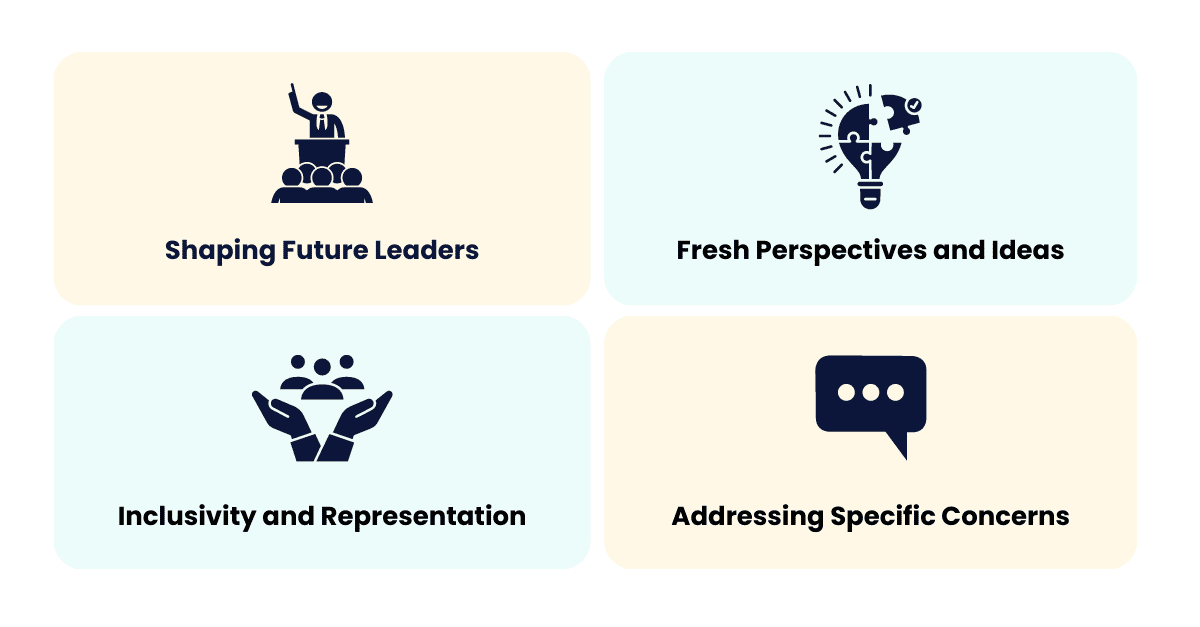
Fresh perspectives and ideas
Inclusivity and representation
Addressing specific concerns
Shaping future leaders
Fresh perspectives and ideas: The youth constantly brings new perspectives and innovative, out-of-the-box ideas. Their unique viewpoints can help drive creative solutions to community challenges and foster a culture of continuous improvement.
Inclusivity and representation: Ensuring a diverse and inclusive community where all voices are heard and valued is essential, as it can lead to better decision-making that reflects the needs and aspirations of everyone. If your demographics are skewed then younger community members are going to feel excluded.
Addressing specific concerns: Youth often face distinct challenges that require specific attention. By engaging them directly, we can address issues such as education, mental health, employment, and social justice that are specific to their age group.
Shaping future leaders: The youth represents the future of our society. So, by actively involving them in community engagement, you can help boost their leadership skills, civic responsibility, and a sense of ownership to help ensure that these future leaders are equipped and well-prepared.
Empowering the youth with online community engagement.
It’s wonderful that you’re eager to foster youth empowerment through community engagement. However, where should you begin? Here are our five tips to get you started.
Educate the youth on community engagement
Actively listen and acknowledge important matters
Accessible and easy to access
Interactive and engaging
Space for anonymous feedback
1. Educate the youth on community engagement
Firstly, there are a few questions you might like to ask yourself that you may need to consider.
For instance, do the youth in your community clearly understand what community engagement is? Are they aware of the benefits of participating and why it’s important? Do they even know about your organization or your community engagement platform?
Answering these questions can help you lay the groundwork for what awareness you need to bring to the table to help improve and foster meaningful engagement.
2. Actively listen and acknowledge important matters
The needs and concerns of young people are often sidelined due to their age, resulting in feelings of exclusion and frustration. Consequently, neglecting their input can cause them to withdraw from community engagement. So, it’s important to actively listen to their concerns to create inclusive environments where they feel heard and encourage their meaningful participation.
Furthermore, placing importance on significant issues such as mental health, which deeply resonates with often-dismissed young people, can help boost active engagement in these meaningful discussions. This can be achieved by ensuring their voices and concerns are not only recognized but also heard.
For instance, Mission Australia conducted a 2022 Youth Survey Report, which revealed 33.9% of young individuals aged between 15 and 19 identified mental health as a major concern in Australia. In addition, nearly 3 out of 10 of these participants felt unsure about how to get help or assistance for their challenges, which highlights an opportunity to enhance awareness about mental health support services that are available.
By addressing the needs and concerns of these individuals and integrating their insights into decision-making processes, you can help foster a more inclusive and empowered environment that recognizes the value of every age group.
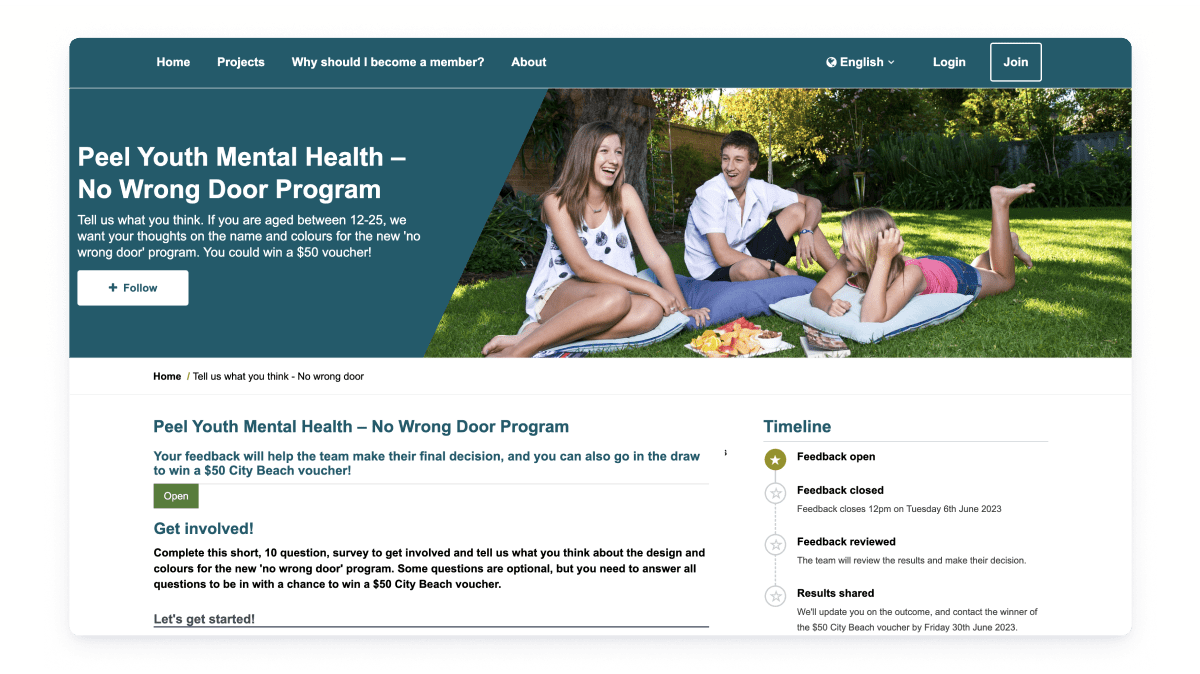
The ‘Peel Youth Mental Health – No Wrong Door Program‘ project by the South Metropolitan Health Service serves as a great example. The government managed to obtain feedback through a survey that targeted individuals and their families aged between 12 and 25 to help them choose their program’s name and colors. This initiative not only encouraged youth engagement in decision-making on important matters but also enhanced their awareness of more accessible mental health services.
3. Accessible and easy to access
The digital realm breaks down geographical barriers, allowing youth from diverse backgrounds to participate and contribute regardless of their location.
This can encompass initiatives such as developing user-friendly online platforms tailored to their tech-savvy nature, organizing interactive workshops, and employing social media channels to connect and inspire youth involvement.
Collaboration with schools, universities, colleges, and youth organizations can enhance accessibility by embedding community engagement into curricula or extracurricular activities. By highlighting the importance of active citizenship and offering opportunities for hands-on involvement, we can ensure that youth are engaged and equipped with the skills and perspectives needed to shape their communities future.
Online engagement can accommodate varying schedules, enabling youth to participate at their convenience, making it ideal for students who might be juggling academic commitments.
4. Interactive and engaging
While surveys can be a valuable tool, filling out too many over time can get tedious. The youth want something more exciting and engaging that captures their attention. Given their tech-savvy nature, incorporating visuals like graphics, videos, and interactive tools online can effectively capture their interest and engagement.
By leveraging interactive and visual engagement tools, councils can present information in engaging ways that resonate better with the younger generation. This, in turn, nurtures a stronger sense of community involvement and inclusivity as the youth find themselves seamlessly integrated into conversations that shape their environment.
5. Space for anonymous feedback
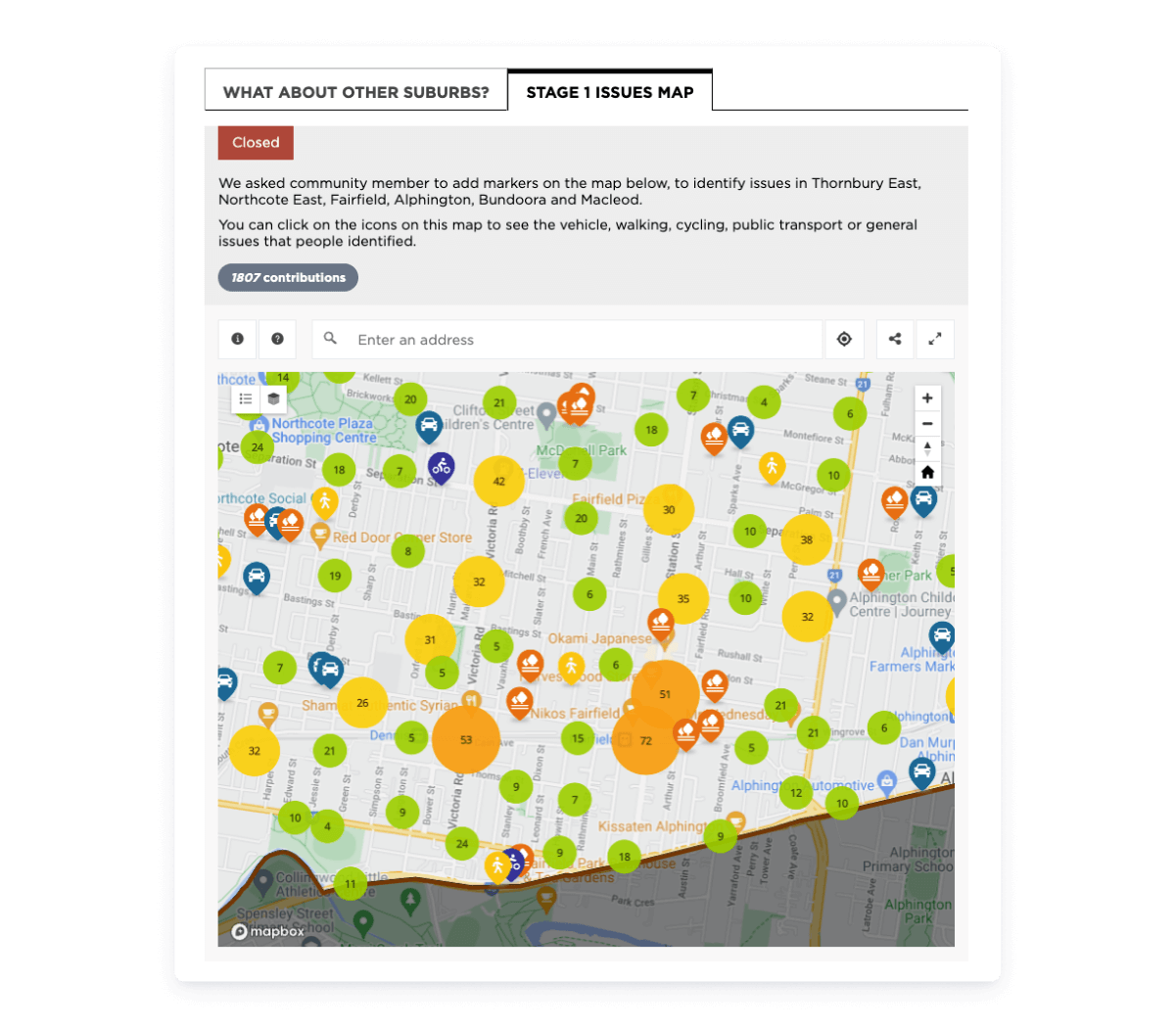
To combat controversial issues, you might consider implementing a project that receives anonymous feedback, which would only require respondents to provide their age. This approach would provide insights into private matters, like lifestyle habits (smoking, vaping, and drinking), and positive aspects like road conditions and access to cycling paths.
This method ensures a formal and confidential means of gathering valuable information to inform your endeavors more effectively. And, if your engagement platform includes advanced community-building features, you can consistently increase your engagement rates with your younger community members over time.
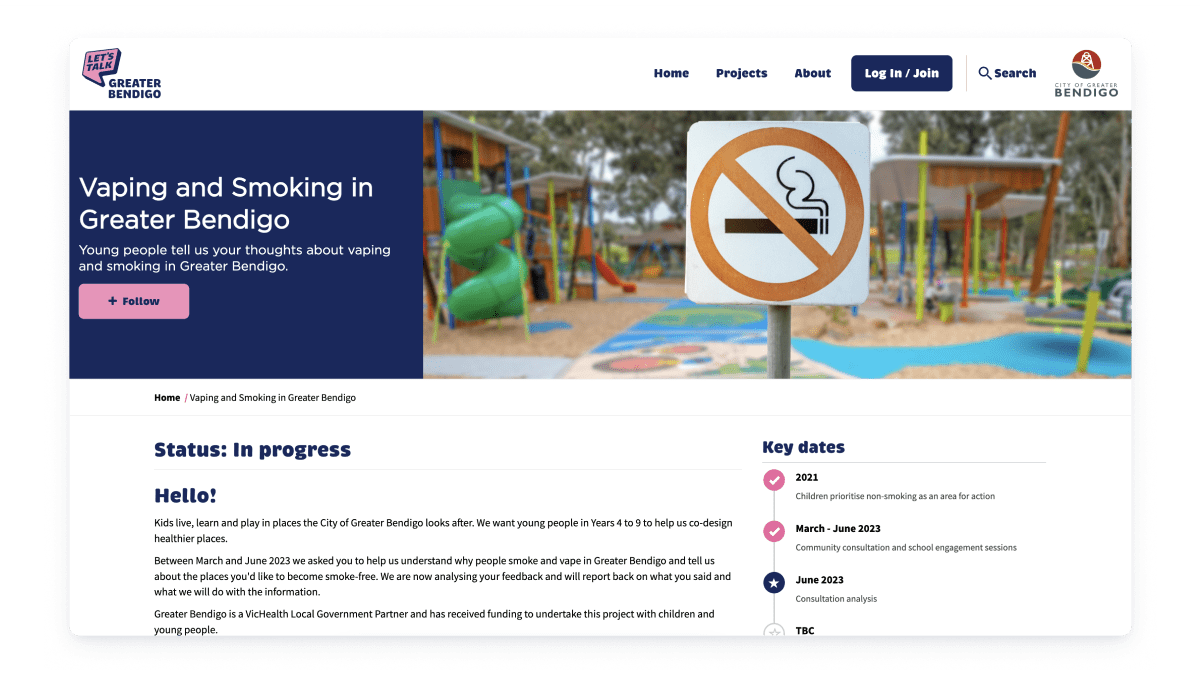
The City of Greater Bendigo provided a great demonstration of collecting input regarding vaping and smoking within the wider Greater Bendigo area. Through the implementation of a survey, they engaged with the youth to find out the reasons behind smoking and vaping in Greater Bendigo. This initiative aimed to gain insights into the areas within the community where they would prefer to establish smoke-free environments.
Online community engagement is a powerful avenue to involve youth, including students, young adults, and children, in community matters. By recognizing the importance of their participation it empowers them to contribute meaningfully to the community’s development, ensuring a brighter and more inclusive future for all.
If we harness the potential of online platforms, we can create a safe space where the voices of the youth are acknowledged, heard, and valued.
As citizens increasingly turn to the internet to voice their opinions, share feedback, and seek information, it’s important that we show up in those key moments. Understanding and implementing Search Engine Optimization (SEO) strategies will enhance the visibility and reach of your online engagement initiatives so you can connect with your community at the right time.
You see, your community expects to reach you online. Whether it’s for information or interaction, when they conduct a quick search, they’re expecting the right result to appear. But, simply creating an online presence is not enough to reach the right audience.
With an effective SEO strategy in place, you can amplify the visibility of your community engagement initiatives and consistently increase the reach of your efforts.
Thankfully, SEO is not nearly as scary as it seems. And the steps to set yourself up for success are simpler than you might think.
What is SEO, and why is it important?
Before delving into the tips, it is crucial to grasp the significance of SEO in the context of community engagement. Simply put, SEO is the process of growing the visibility of a website or a web page on search engine results pages (SERPs). This means that your relevant audience can easily find and engage with your content.
For example, if you were conducting a corridor study of the I-5 through Downtown Seattle and you were inviting the public to contribute initial feedback then it would be useful if your project appeared for the following search results:
Downtown Seattle corridor study
Provide feedback for I-5 corridor study
Downtown Seattle I-5 corridor improvements
If you aren’tshowing up, then search engines aren’t classifying your content as useful or relevant enough. So, to combat this, we can make a few easy adjustments to improve the chances of appearing in the top search results.
And just to be clear, when we are talking about search results, we mostly mean Google Search. Currently, Google still handles more than 90% of all internet search queries.
Quick tips for enhancing SEO for community engagement.
Whilst there are a whole host of technical factors that go into SEO, the most important thing you can do is make sure the content you publish is reliable, authoritative, up-to-date, and easy to find.
To help your content meet these standards, here are 5 simple tips you can implement today:
Understand the power of keywords
Craft SEO-friendly headlines
Create high-quality, valuable content
Optimize metadata and URLs
Leverage internal linking
1. Understand the power of keywords.
Keywords are the foundation of successful SEO. For most content pieces, conducting thorough research to identify relevant keywords and phrases that will resonate with your audience is essential. In saying that, keyword research for community engagement is pretty straightforward!
Most of the time, your keywords will have a direct correlation with the project of focus. So, if we take our I-5 Corridor Study project as an example, you’d want to ensure ‘Downtown Seattle I-5 Corridor Improvements’ is incorporated throughout your content.
Ensure that your keyword is placed in your title tag, headline, paragraph headers, and body text. But, be cautious, your keyword needs to sound natural and shouldn’t be forced into text where it doesn’t fit – this is called ‘keyword stuffing’.
Headlines play a vital role in capturing the attention of your audience and search engines alike. Ensure your headlines are both catchy and optimized for SEO by using the appropriate header tags.
Header tags are an HTML element used to designate headings, usually from H1 to H6. You should use your related keywords in your headings and organize them appropriately. And, as a rule of thumb, each page should only have one unique H1 that described the main topic; this is often created automatically from your page title.
From here, you should ensure that your content is organized with sub-headings. This will not only make your content more scannable but also boost its visibility in search results.
If the title of our page is Downtown Seattle I-5 Corridor Improvements, we could include the following sub-headings to organize content:
H2: Shaping Downtown Seattle’s I-5
H3: Feedback So Far
H3: How to Provide Feedback on I-5 Corridor Improvements
H2: Opportunities to Have Your Say on I-5 Corridor
Utilizing participation tools, such as the Social Map, invites interaction and engagement which can greatly boost your visibility in search results.
3. Create high-quality, valuable content.
We hope this one isn’t too obvious, but engaging content is the heart of successful SEO. If you’re providing valuable and engaging information and solutions to the queries and concerns of your community then you’re off to a great start! Google favors fresh, well-research content, so ensuring your pages are kept up-to-date and relevant will improve your search rankings.
So, in the context of community engagement and our I-5 Corridor Improvements project, you could:
Include a project timeline with key milestones and phases that you can update as the project progresses.
Utilize a Social Map to gather location-based feedback within the study area and allow participants to pinpoint key opportunities or challenges.
Attach relevant documents, images, or videos to enhance your content and provide additional avenues of media consumption and learning.
Create an FAQ section to help address key questions or concerns that have arisen from the project so far.
Metadata? Optimizing URLs? We swear this isn’t rocket science. And, thankfully, within Social Pinpoint, our SEO section in Page Settings allows you to make all of these adjustments very fast.
Let’s start with metadata.
This information is what users will first encounter when they land on the SERP. So, crafting compelling meta titles and descriptions will leave a great first impression to draw in searchers and increase traffic.
Your meta title should summarize your page, include your target keyword, and stick to a 50–60 character limit. Your meta description should expand on and complement your title, we also suggest keeping the length of your description to 120–158 characters.
Here’s a compelling and descriptive example for our I-5 Corridor Improvements:
Meta title: Downtown Seattle I-5 Corridor Study – Provide Feedback
Meta description: The City of Seattle invites the public to provide input and consideration on where improvements are most needed.
Now, how about optimizing URLs?
Well, most page titles actually make perfectly optimized URLs, as long as they are simplified, and don’t contain any special characters or spaces.
Therefore, the URL for our example would be: downtown-seattle-interstate-5-corridor-improvements.
Directing users to specific sub-pages to submit feedback can help create more structure and hierarchy in your page, allowing you to leverage the power of internal linking.
5. Leverage internal linking.
Internal linking not only helps users navigate through your community engagement site but also assists search engine crawlers in discovering and indexing your content effectively. Internal links are really useful for establishing site architecture and showcasing related content.
Within the community engagement space, we see a lot of our clients host their participation tools within additional sub-pages. This not only helps add additional structure to their project content, but helps direct the community to the exact area/s to submit feedback.
And, if a project is near completion, or there have been a lot of updates, internal linking ensures your community has easy access to the most up-to-date and relevant information about how their feedback has shaped the end result.
A quick mention of technical SEO (the slightly scarier SEO).
So far, the tips and strategies mentioned are all elements of SEO you should have control over. However, there is another element to SEO that could be impacting your overall SEO success – technical SEO.
Technical SEO is the slightly scarier, more complex side of SEO. This is all to do with optimizing your website so it’s not only easy to crawl and index by Google’s standards, but that it also provides a positive (and fast) user experience.
Utilizing an online community engagement platform that meets these standards and provides a seamless user experience across all devices will positively contribute to technical SEO. Not to be biased, but Social Pinpoint’s responsive and accessible design meets these standards and invites interaction from your community.
Key takeaways
SEO is the process of growing the visibility of a website or a web page on search engine results pages – and it’s much more simple than you may think!
Make sure the content you publish is reliable, authoritative, up-to-date, and easy to find. For a lot of projects, especially ones that invite interaction and engagement from your audience, they may be already boosting the visibility of your page for you.
Small shifts in how your write, and adjusting settings on some of your pages could make a huge difference in the long run.
When it comes to collecting authentic and high-quality data, mandatory registration for your community engagement site can prove to be a valuable tool. With the implementation of mandatory registration, organizations can enhance their decision-making and community engagement efforts by ensuring that feedback is received from genuine individuals who are true residents of the area.
The mandatory registration process requires individuals to provide their personal details before participating in community activities. The data collected then enables organizations to consistently improve and tailor their engagement initiatives, therefore creating more relevant experiences that better cater to the specific needs of the community.
While mandatory registration may encounter certain barriers, such as community resistance and concerns about data collection, it is essential to prioritize transparency and openness throughout this process. By building trust within the community, and remaining honest about how data is collected and stored.
In this article, we will explore the benefits of using mandatory registration and provide recommendations on how to effectively implement this useful tactic on your community engagement site.
What are the benefits of mandatory registration for community engagement?
While open, public projects are great for community engagement and getting everyone involved, they can also come with their own challenges.
As these projects are available for anyone and everyone to get involved and have their say, it’s almost impossible to track unique instances of feedback or understand the demographic breakdown of responses. Data can be distorted and skewed, especially if certain stakeholder groups are actively dominating the conversation.
Because of this, these open projects sometimes have the ability to sway certain outcomes in a different direction compared to ideal participants and their preferences.
Even though you are receiving a large amount of feedback, these individuals may not actually be representative of your community of interest. This is where mandatory registration comes in.
By encouraging people to register on your community engagement site, you can remain confident that the feedback you are receiving is not only genuine but is coming from stakeholders that have a vested interest in the project.
With mandatory registration, you also gain access to more accurate and valuable insights, such as demographic data, to better understand your community’s needs and concerns. This valuable data empowers you to tailor your engagement strategies to ensure you are truly reaching a representative cross-section of your community and effectively target the right audience.
Mandatory registration allows organizations to maintain a database of community members, enabling you to establish stronger connections, gather feedback, and provide personalized support. It can also be used to facilitate effective communication, as registered participants can be notified about upcoming events, updates, or opportunities for involvement.
And, as you consistently capture unique data from community members, you can further understand and identify where you may see gaps in representation and reach – allowing you to pivot your strategy when needed.
How can you implement mandatory registration for community engagement?
If you are considering implementing the use of mandatory registration for your community engagement initiatives, let’s explore the recommended steps to help you get started.
1. Gradually implement mandatory registration.
Whilst change can be new and exciting, your community may be confused or concerned about the shift.
If you were to suddenly implement mandatory registration, you may encounter resistance from your community. Folks may have questions about the purpose of data collection or the need for providing personal information. People can be very cautious about their personal data and privacy, especially among older generations.
If you’re looking to implement mandatory registration, we’ve had a few clients trial this technique on specific projects or different participation tools – just so they can understand the impact this may have on feedback.
It is also important to be open and transparent with the public about your intentions, by providing information and addressing any concerns or questions you can ensure everyone is on the same page.
2. Inform your community through various communication channels
Okay, so you’ve conducted a trial with your community, and you’re ready to implement mandatory registration across your entire engagement site. What’s next?
To prepare your community and ensure they are well-informed about this change, early communication is key. But what is the most effective approach?
We recommend using a mix of information and visuals to explain the change. Visuals can be highly effective in conveying information as they are often easier to understand compared to plain text. Videos, in particular, provide a powerful tool to explain the process and highlight the benefits.
It is also vital to select the appropriate platforms to reach your community effectively. Review where your community connects with you most and consider utilizing multiple channels to maximize your reach and engagement.
Let’s delve deeper and review which channels you can utilize to inform your community regarding mandatory registration.
Email marketing campaigns.
By evaluating your existing membership base, you can work towards developing an email marketing campaign to inform your community of this change. The primary objective of this campaign will be to ensure that your clients are well-informed about the change, including its purpose, benefits, and any necessary actions they need to take prior to the implementation date.
This personalized approach will help foster engagement, maintain transparency, and enhance the overall user experience throughout this transitional phase.
Social media promotions.
It is likely that some individuals may have previously opted out of receiving emails, while others may not have received them simply because they haven’t subscribed to your email campaigns. Therefore, it’s crucial to ensure that these individuals are still informed about the change. One effective alternative for reaching out to your community is through your social media channels.
Social media serves as an excellent platform to keep people updated and also offers an opportunity to expand your membership base. This can be accomplished either through organic reach or through paid advertising campaigns.
Website articles and FAQs.
Your organization’s website (or current engagement site) serves as a centralized hub of information, allowing anyone who visits the site to easily stay informed about changes and recent developments. By featuring this important update on the homepage, you ensure maximum visibility and accessibility for a wide range of users.
This also presents an opportunity to direct users to an article, video, or frequently asked questions (FAQ) section, offering more detailed information to address any potential confusion.
3. Implementing and evaluating your mandatory registration process.
Once you have informed your community, it is now time to implement mandatory registration (you made it!).
Throughout this implementation period, you may get some more confusion or pushback, but it’s important to be patient with your community and provide more support to ensure folks feel safe and informed.
At the end of the day, this will save your community loads of time as they won’t have to consistently enter demographic information. And, people will only receive the most relevant updates and notifications that align with their interests.
Once implemented, it’s also important you carefully monitor and evaluate whether mandatory registration aligns well with your community. Have you achieved your intended objectives? This includes gathering feedback from a wide variety of tools and analyzing the quality of feedback you’ve collected.
By assessing the quality of feedback and overall satisfaction of participants, you can easily pinpoint any challenges or barriers faced by your community and identify areas for improvement.
Is your feedback more representative of your intended audience? Are you identifying greater gaps in your engagement strategy and targeting? Do you need to focus more on specific age groups? Are locals in certain areas not engaging?
Implementing mandatory registration gradually enables the collection of higher-quality feedback and promotes authentic engagement within the community. By addressing concerns and maintaining transparency regarding data collection and usage, you can effectively mitigate fear and resistance among community members.
Additionally, leveraging a variety of communication channels such as email marketing campaigns, social media platforms, and your organization’s website ensures widespread visibility and accessibility. This approach guarantees that all community members stay well-informed about updates and changes, fostering a sense of unity and shared understanding.
Private community engagement projects empower organizations to foster meaningful connections, facilitate focused discussions, and build stronger relationships with specific groups within their community. They can be highly effective for targeting key stakeholders, and driving focused discussions.
Sometimes, you may not want every single community member to provide input. We know this might sound a little crazy, but bear with us. You see, when it comes to community engagement, organizations may adopt various approaches when interacting with their community.
More often than not, projects are made public, aiming to engage with a wide range of community members. Public projects invite interaction and engagement from everyone and allow you to reach all of your intended audience.
Recently, we have seen the rise of private projects, focusing on specific groups for more targeted discussions. Private projects allow you to segment your community and provide a more personalized, focused approach for your engagement.
Let’s explore the advantages of using private projects to foster meaningful collaboration and participation in community engagement initiatives.
What is the Difference Between Public and Private Projects for Community Engagement?
Before diving into the advantages of private projects in community engagement, let’s first gain an understanding of the concept of private projects and how they differentiate themselves from public projects.
Public projects for community engagement
In community engagement, public projects aim to involve a broad spectrum of participants, welcoming individuals from diverse communities. These projects seek diverse perspectives and strive to include as many individuals as possible.
Public projects prioritize openness and transparency, empowering participants to contribute to decision-making processes. Organizations may utilize broad strategies, such as hosting public meetings, utilizing online platforms, and conducting surveys, to engage with a broad spectrum of individuals and collect their feedback.
By embracing public participation, you provide each individual with the chance to express their views and actively engage in the decision-making process.
Private projects for community engagement
On the other hand, private projects for community engagement are more exclusive and limited to specific groups. They’re all about bringing together a select bunch of individuals or stakeholders who have a direct interest or expertise in the project.
Private projects enable concentrated discussions and collaborations within a smaller, carefully selected group. Generally, this allows for in-depth exploration of specific topics or addressing particular issues more relevant to the audience present.
They provide greater control over participant selection and enable the maintenance of confidentiality when necessary. Private projects also offer a dedicated space for the appropriate individuals to collaborate and focus on finding solutions without any disturbances.
An example could be a new Placemaking Strategy for a local restaurant hub – involving key stakeholders, such as restaurant owners, tenants, workers, and nearby residents, in an initial consultation could help build greater trust and transparency.
Benefits of Using Private Community Engagement Projects
Engaging with the community through private projects can offer many benefits to help you enhance the effectiveness and outcomes of your engagement process. Here are some key advantages to consider.
Maintain confidentiality and security
In community projects, effectively handling sensitive information, proprietary technology, and confidential partnerships is crucial. Consequently, ensuring privacy, preventing data breaches, and avoiding disclosure to competitors or the general public are essential factors to be mindful of.
Private projects offer a secure and controlled setting for sharing sensitive information, typically implemented through a login system. By utilizing login credentials such as usernames, passwords, or additional authentication methods, private projects can ensure that only authorized participants can access the project’s content and resources.
For instance, let’s consider a community project aimed at collaborating with a local school to develop innovative teaching methods. To maintain strict confidentiality, a private project can be created, granting access solely to relevant school staff and company representatives who need to access sensitive data. This approach safeguards the interests of both the school and the collaborating company.
By implementing a private project in this context, secure information sharing is facilitated. Therefore, you are able to foster trust and confidentiality among the involved parties by ensuring that sensitive information is handled with the necessary precautions.
A community engagement platform that has achieved the highest standard of security, safety, and support, such as ISO 27001 Accreditation would allow you to remain confident in data privacy and integrity.
Focused collaboration with key stakeholders
Private community engagement projects enable collaboration with specific groups or members who are directly involved in or have a particular interest in the project. By limiting the project’s access to the designated group, participants can delve deeper into the topic, sharing their experiences, expertise, and ideas more openly without external distractions or noise.
For example, let’s say you are involved in a public health campaign that targets mental health issues within a particular community. To foster impactful and purposeful conversations, you can establish a restricted community engagement endeavor by thoughtfully handpicking participants who possess relevant expertise, knowledge, or vested interests in the project. Members might include mental health professionals, local community leaders, residents with personal experiences, and representatives from relevant organizations.
With restricted access, it can allow for focused discussions, where participants can dive deep into the topic, consider different viewpoints, and engage in rigorous debates. This tailored and collaborative approach maximizes the involvement of key stakeholders, leading to more impactful and sustainable outcomes for the community.
Enhanced participation and motivation
As well as improved collaboration, private projects can also enhance participation. By engaging in small-sized groups, private projects enable focused and meaningful interactions, fostering community members’ willingness to participate and contribute.
In a more intimate setting, their perspectives are valued, providing ample opportunities for expressing thoughts, engaging in in-depth discussions, and taking risks. The reduced fear of judgment or criticism within this select audience empowers individuals to share unique insights that may remain unshared in larger, public settings.
By creating an environment where participants feel valued, engaged, and empowered, private projects unlock the full potential of community members, facilitating inclusive and impactful community engagement. This diversity enriches the overall process and enhances understanding of the community’s needs, aspirations, and concerns.
Controlled and relevant discussions
Private community engagement projects provide a structured and organized platform for addressing specific topics or working with specific groups. By bringing together these stakeholders, you aim to create a platform where everyone can contribute to the most relevant discussions.
You can also segment discussions, initiatives, or tasks based on their relevance or the stakeholders involved. If you were to create a dedicated private project for your Sustainability Strategy, you might have channels dedicated to waste management, renewable energy, green infrastructure, transportation, and community education. Each channel serves as a focused space for participants to share ideas, ask questions, and collaborate on initiatives related to the specific topic.
Efficient information management
Private projects also provide a valuable advantage in organizing discussions, action plans, and resources for participants.
Let’s consider a private project centered around revitalizing a neighborhood park. By utilizing a private project, participants can access relevant information about the park’s history, environmental assessments, proposed design plans, and community feedback within a secure space.
Reporting and analysis of these discussions also helps to prevent information overload and guarantees that valuable resources and insights remain easily accessible to participants. As a result, practitioners can efficiently coordinate efforts, save time, and allocate resources effectively, ultimately driving impactful change within their communities.
Ultimately, the choice between public and private projects depends on the goals and context of the organization’s community engagement initiatives. By considering the benefits of private projects, such as confidentiality, security, and tailored collaborations, organizations can make informed decisions to maximize the impact of their community engagement efforts.