Before we look forward and reveal our predictions for the top 2024 trends in online community engagement, let’s look back. 2023 was the year that saw some very clear trends, especially in the digital community space. We saw hybrid engagement come of age, we saw really clear stages in engagement, and we even saw the rise of AI. Below, we’ve listed the five trends we have mapped as the top 2023 online community engagement trends.
The Solidification of Hybrid Engagement
Staged Engagement
Community Development and Going Beyond the Project
Participatory Budgeting
The Initial Adoption of AI in Community Engagement
1. The Solidification of Hybrid Engagement
We predicted this two years ago and it was certainly de rigueur for most when planning community engagement over the past year. Various forms exist, but many projects showcased a mix of online and offline engagement strategies.
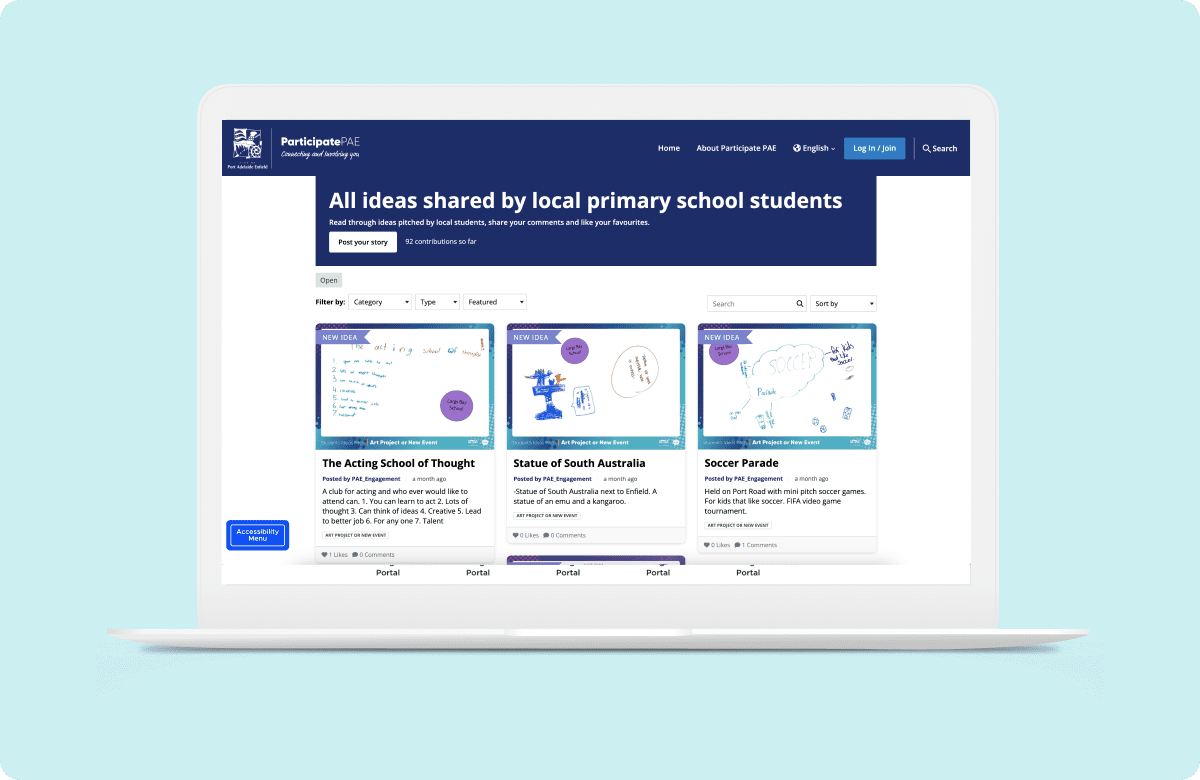
City of Port Adelaide Enfield, South Australia | School Idea’s Pitch Project
The City of Port Adelaide Enfield represented this trend well with their ‘School Idea’s Pitch’ Project, which saw students act as elected members and make mock Council decisions on various issues offline. Their ideas were then shared online for community comment and support through upvoting, with some ideas being taken to the Council’s chamber for discussion. This was a great way to get younger members of the community engaged in what local government does at an early age and a good example of the value of hybrid engagement.
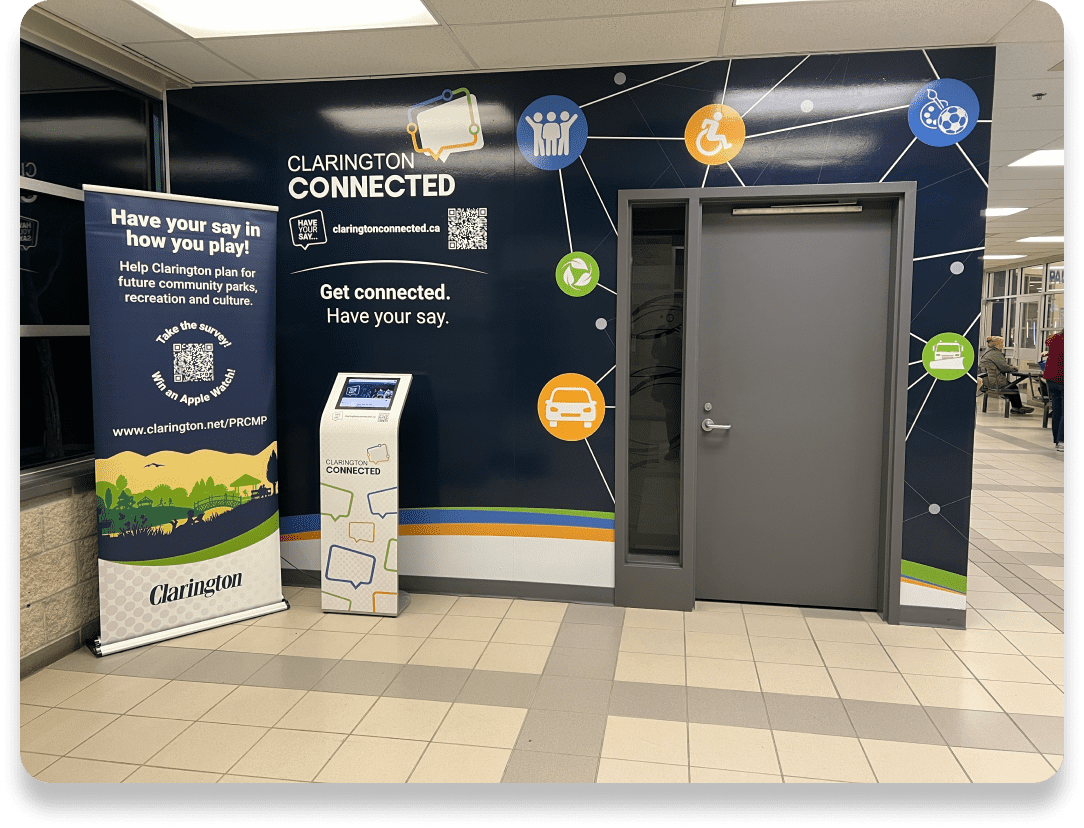
City of Clarington, Canada | Parks, Recreation and Culture Master Plan
On the Canadian side, Clarington in Ontario implemented a robust hybrid engagement strategy for their Parks, Recreation and Culture Master Plan, which included pop-up open houses around town, online meetings at various times of day, asynchronous digital engagement surveys, and even in-person kiosks at City Hall. The kiosks in particular saw great positive feedback on bridging the digital divide and high levels of engagement throughout the second half of 2023. It will be exciting to see how the kiosks are used going forward, and how peer municipalities learn from Clarington’s example.
2. Staged Engagement
When we say staged, we don’t mean fake news. Instead, what we mean are consultations with multiple stages of engagement from early engagement, even pre-engagement, through to closing the loop. Using a digital engagement platform makes staged engagement even easier and facilities a more robust process.
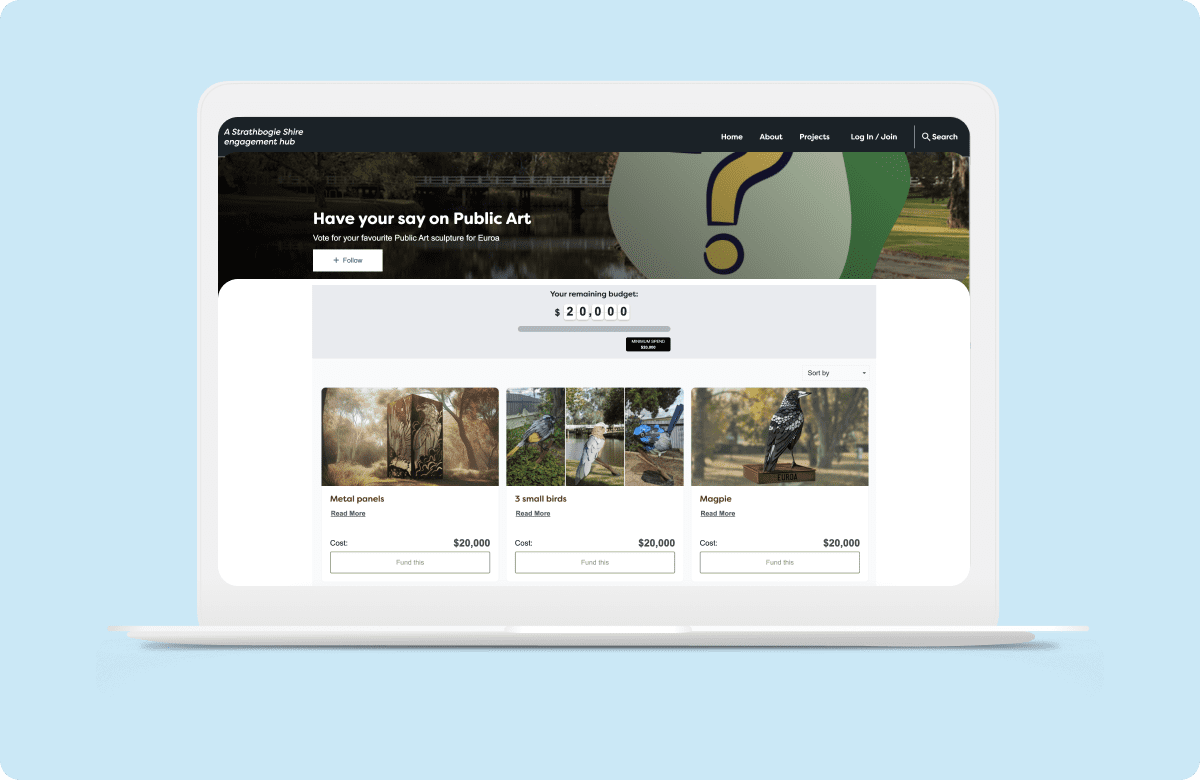
Strathbogie Shire, Victoria | Public Art Project
This was perfectly presented in Strathbogie Shire’s ‘Public Art’ Project, which started with pre-engagement to engage the community before the project had officially begun to see what community members were feeling, and ended with closing the loop to ensure that the participants were able to see the results of the project once it was concluded and so they could see their influence on the outcome.
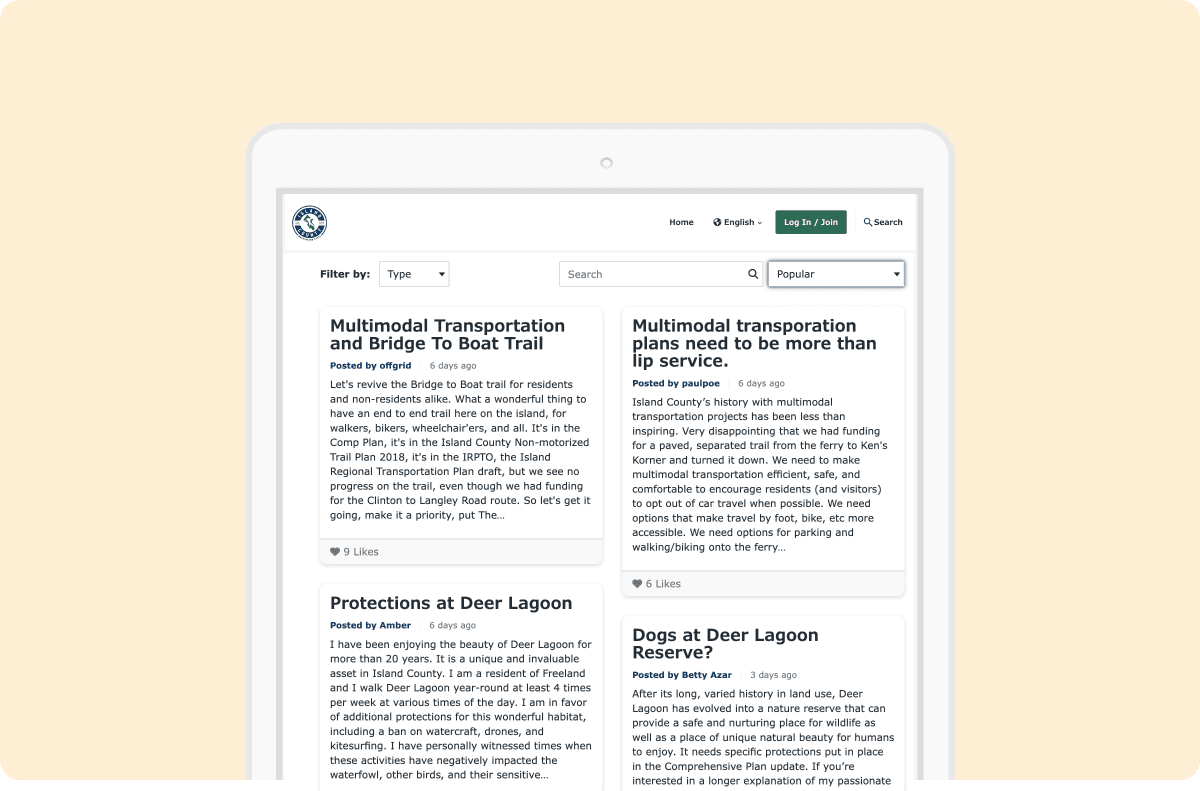
Island County, Washington | Comprehensive Plan
With large and long-term planning projects, a similar goal can be achieved by using the same project space over time. Island County, Washington (USA), recently launched their Comprehensive Planning process with the intention of collecting ideas in the visioning stage, before later moving into the plan development stage. This will allow participants to influence the process while it’s still being developed and to find upcoming engagement opportunities both in- person and online.
3. Community Development and Going Beyond the Project
Late in 2023, at a conference in Canberra one of the speakers said, “people don’t live in projects, they live in places.” We couldn’t agree more. In the online space, what we have seen in the last year is the ‘traditional’ online community engagement starting to go beyond the project and transitioning to include more ongoing relationship and community development type projects. This will certainly continue into 2024 as it adds more value to the online space and also helps maintain and engage the online community.
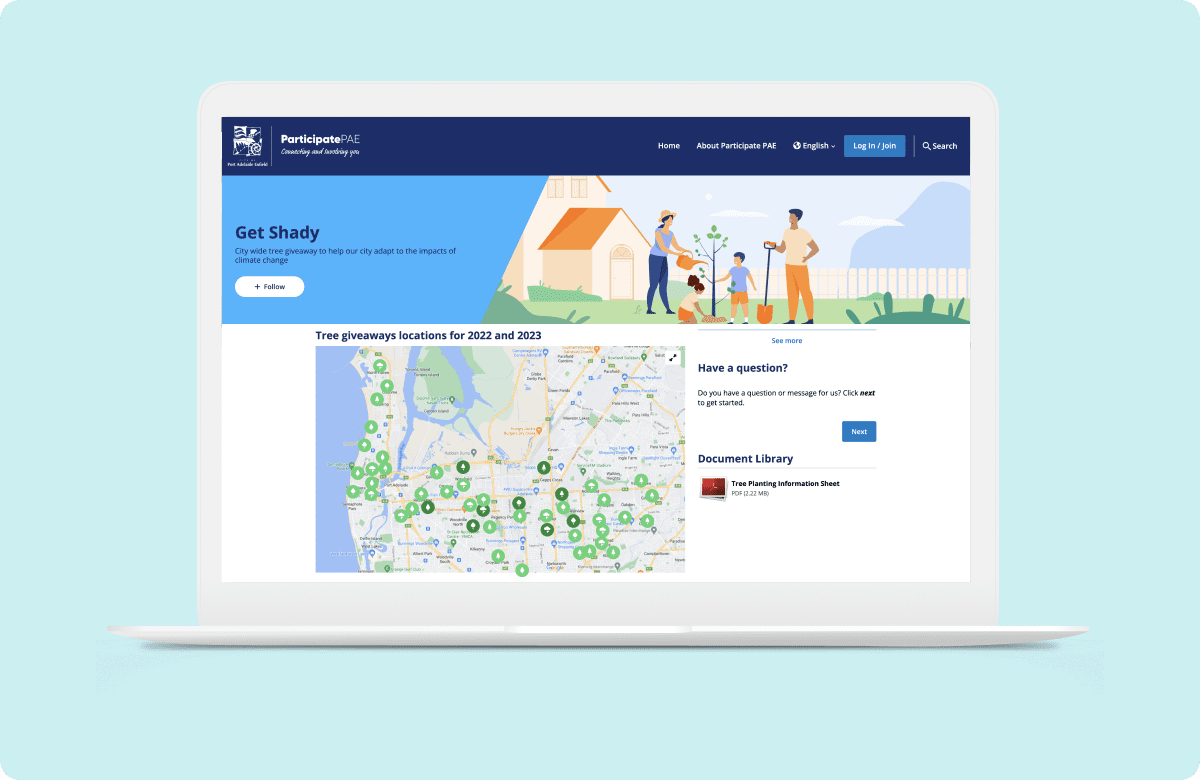
City of Port Adelaide Enfield, South Australia | Get Shady Project
In 2023, a stand out project in Australia was the City of Port Adelaide Enfield’s ‘Get Shady’ project which engaged the community long term to distribute over 3000 native species of trees to help create a shade canopy to tackle climate change. This simple yet important project has helped the local government develop its relationship with the community on an issue that is on everyone’s minds while not providing a strict timeline.
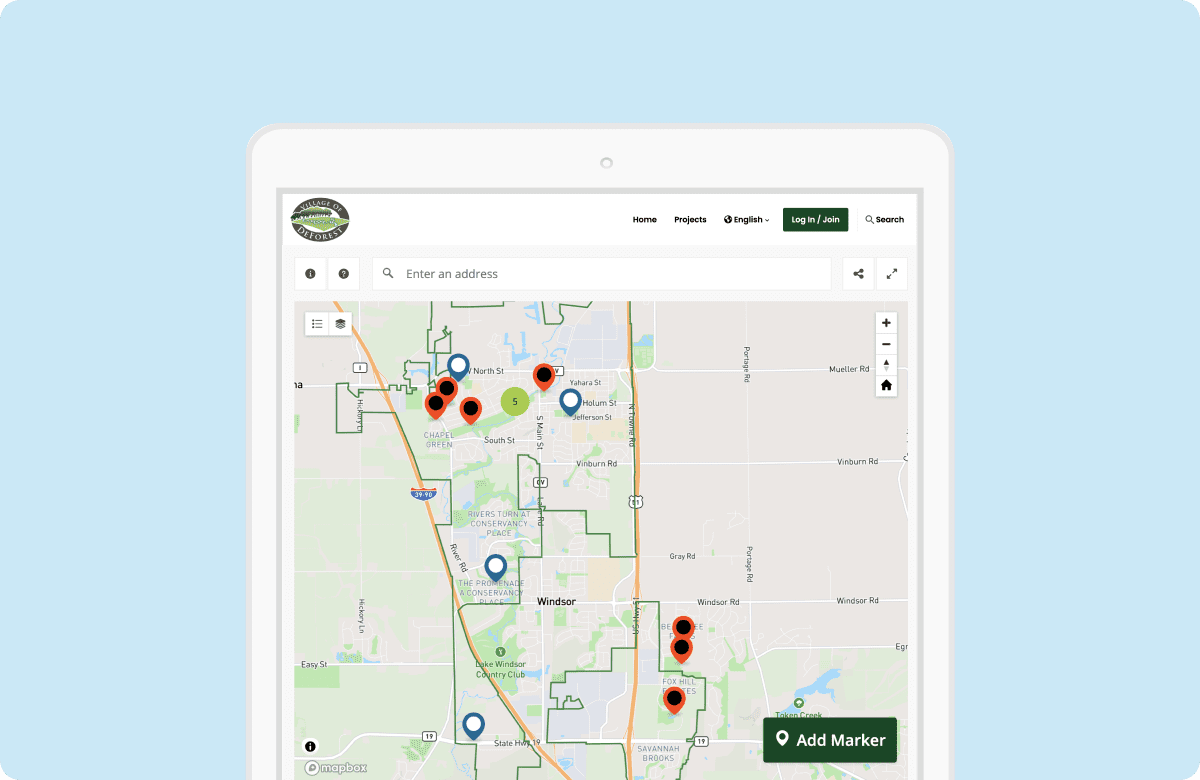
Village of Deforest, Wisconsin | Birds of Deforest and Houses for Them
We also saw elements of this ‘beyond the project’ style work in North America in towns like Deforest, Wisconsin, where they are using Social Pinpoint to capture community spirit and a little bit of Citizen Science around birdwatching and acknowledging the role of community advocates to preserve and support this activity.
4. Participatory Budgeting
Participatory Budgeting started in Brazil in the 1980s, and it was used across Europe as a recovery tool to the Global Financial Crisis (GFC). It is now growing in use throughout Australia and North America. It’s not surprising that we are starting to see a big increase in the use of Social Pinpoint’s Fund It tool.
Now a popular tool, Fund It is certainly seeing more use in local government budgeting processes. It’s also often used in funding community projects; for example, participatory budgeting and tradeoff exercises can be used to engage the public in choosing everything from building elements of playgrounds and dog parks, to voting on the final designs for public art and mural projects.
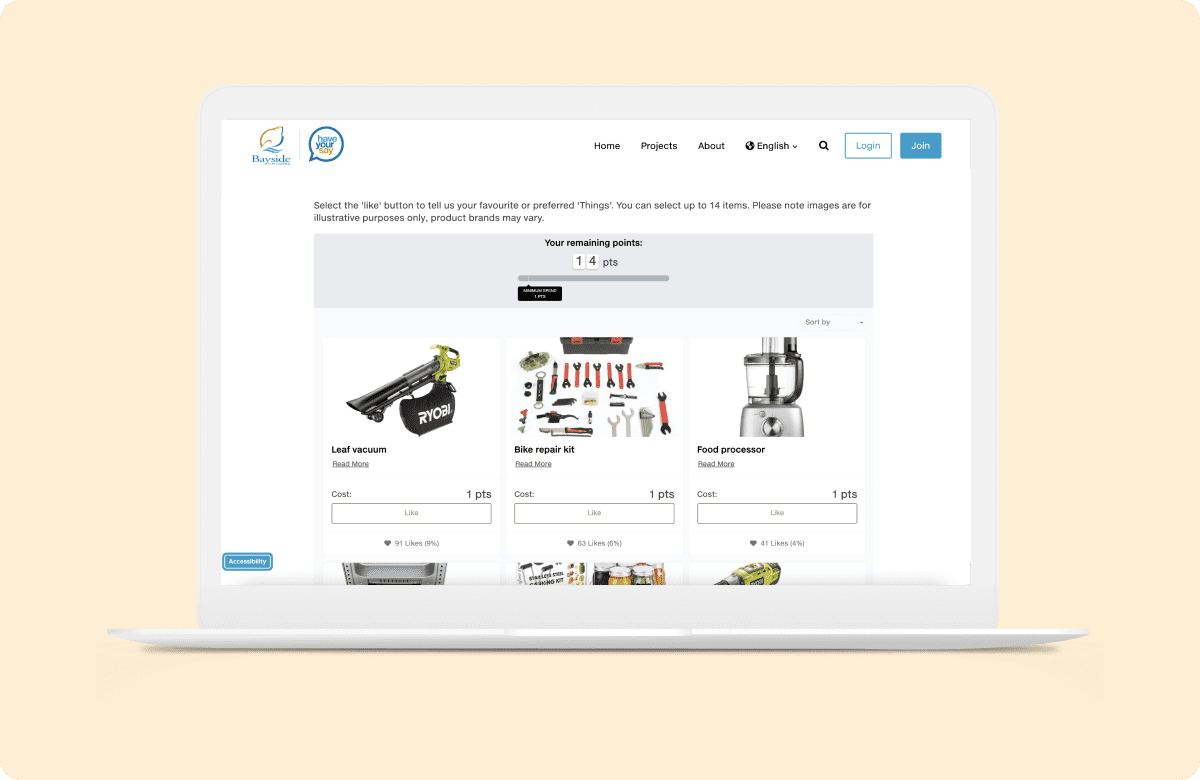
Bayside City Council, Victoria | Library of Things
A favorite of ours is Bayside City Council’s ‘Library of Things‘ because it encapsulates the local government’s desire to spend public money on items for the library, like lawn mowers and kitchen utensils. But it takes away the stigmatic cost element by first asking the Community to choose items using points in the Fund-it tool and secondly by asking them to provide their own ideas via the Gather tool. While there is no project decision here to be made, the community is using participatory budgeting to own its Library of Things.
In Monterey, California, they deployed the Fund It tool to assess community values around distribution of housing units (instead of dollars or points!). The question posed was: “We need to accommodate X many additional housing units in Monterey over the next X many years, how would you distribute those units among the following neighborhoods?” The Fund It tool gave project managers space to explain the tradeoffs involved in choosing different neighborhoods while still keeping the budgeting exercise simple enough to be accessible to a broad cross-section of interested community members.
5. The Initial Adoption of AI in Community Engagement
While we are only just really learning the possible impacts (good and bad) of AI in community engagement, ChatGPT set the world alight earlier in 2023 with talk of how AI could help us with our everyday lives. If you attended any conference between September and December 2023 in the community engagement space, you would have surely encountered at least one workshop, session or keynote on the subject. Earlier last year, IAP2 North America even hosted a six-part series on the role of AI in public participation while at least three sessions at the IAP2 Australasian Conference were about AI.
What we have learnt is that there are both advantages and disadvantages to early adoption with AI. Speed and efficiency are great at an organizational level; however, the human element is often critical in a community engagement context, and data privacy and reputational risk must be carefully considered in the deployment of AI tools. Are your communities and stakeholders ready for it, even if you are?
We were excited to see these trends advance the field of community engagement in 2023. While some of these trends, such as hybrid engagement, continued to build from previous years, we expect many of these trends, like the growth of AI, will certainly continue to take shape into 2024.
In recent years, we’ve observed the rapid advancement of artificial intelligence (AI), and it shows no sign of slowing down, particularly in the foreseeable future. Notably, it’s consistently reshaping our behaviors, decision-making processes, and the way we interact with one another. Yet, with the ongoing development and increased integration of AI into our daily lives, a crucial question arises: Will AI replace community engagement?
Community engagement has played a crucial role in being responsible for societal progress, fostering connections, shared visioning, and better placemaking. However, as AI technologies evolve, there’s been a growing curiosity and an increasing amount of uncertainty about if and how it can change the way people engage in communities.
Within this article, we will explore the benefits and challenges of AI while discovering ways to strike a balance between technology and human connection for community engagement.
The Benefits of AI in Community Engagement
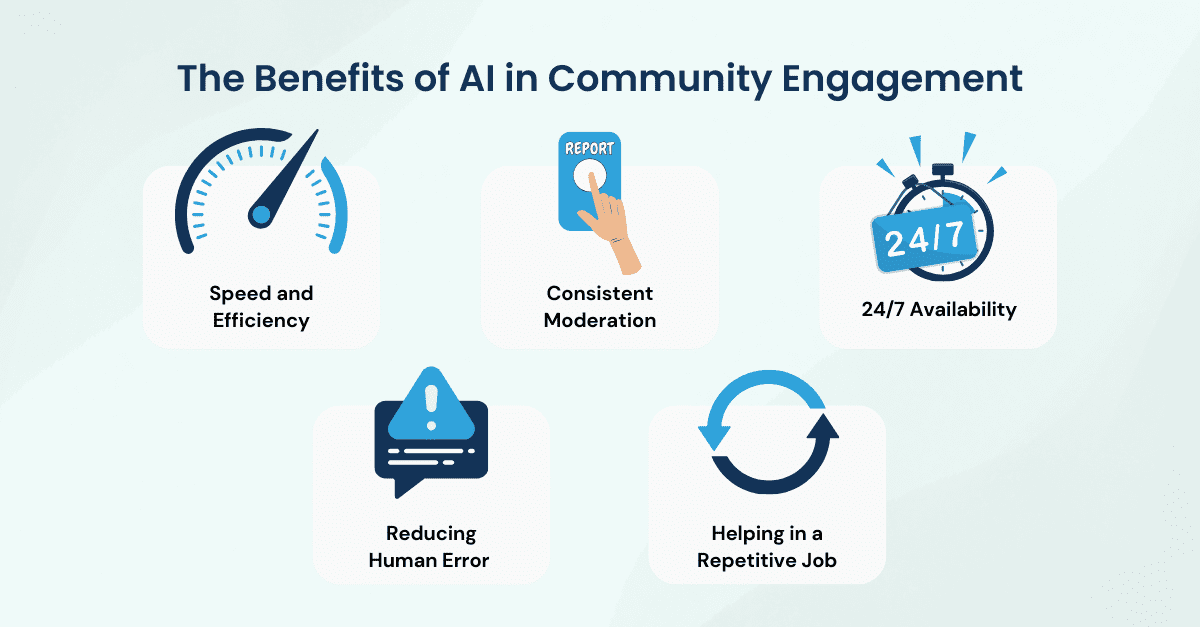
The relationship between AI and community engagement offers a promising horizon. It introduces efficiencies, personalization, and data-driven insights that can redefine the participation experience. It’s crucial to balance this technological prowess with the intrinsic human touch that has always underpinned customer relationships. Here are 5 advantages of using AI in your community engagement strategies:
1. Speed and Efficiency
2. Consistent Moderation
3. 24/7 Availability
4. Reducing Human Error
5. Helping in a Repetitive Job
1. Speed and Efficiency
Successful community engagement projects, particularly when online tools are used, can lead to massive volumes of data. While quantitative datasets can be easily visualized using colourful graphs to garner instant insights, analyzing qualitative data can be daunting and time consuming. This is where AI can drive speed and efficiency.
For instance, you can use Social Pinpoint’s Analysis Assistant to analyse vast amounts of unstructured, qualitative data in real-time. This means that you can utilise your engagement data to quickly gather sentiments, themes, and insights.
2. Consistent Moderation
Through programming, AI can enforce consistent community guidelines and moderation to ensure that all users are treated fairly and equally. By utilizing AI driven moderation such as Social Pinpoint’s anti-SPAM technology, you can leverage AI to automatically identify and address any potential violations and harmful content, which results in a safer and more inclusive digital environment.
3. 24/7 Availability
AI never sleeps, allowing AI-driven humanized chatbots and virtual assistants to provide round-the-clock community support to residents in real-time. AI possesses the capability to accommodate diverse time zones and work schedules, enabling you to promptly address various needs and concerns, ultimately enhancing the overall user experience for community members. This 24/7 support contributes to a more engaging and accessible platform for users worldwide.
If you look at FranklyAI for example, you can move away from surveys and forms and effectively chat with AI who is actively listening using user led conversations. It’s more conversational that the standard chatbot that will normally find out information from you to then provide information back, normally with choices.
4. Reducing Human Error
While mistakes are bound to happen, you can harness AI for community engagement to reduce human errors. While human moderation will always be highly valuable, AI has automated processes that can consistently analyze data and interactions, reducing the risk of oversight or mistakes in content moderation. Additionally, AI algorithms can adapt and learn from patterns, ensuring a more accurate and efficient identification of issues, further enhancing the overall reliability of community management.
5. Helping in a Repetitive Job
To help assist you with tedious repetitive tasks, AI can also help you by automating repetitive procedures so that you can concentrate on more intricate and other creative areas of your work. So, not only will it accelerate particular workflows, but it also has the ability to reduce the likelihood of humans feeling fatigued, to help promote a more sustainable and fulfilling work environment.
Let’s turn our attention to the challenge of using artificial intelligence for community engagement now that we have explored what benefits it can bring.
The Challenges of AI in Community Engagement
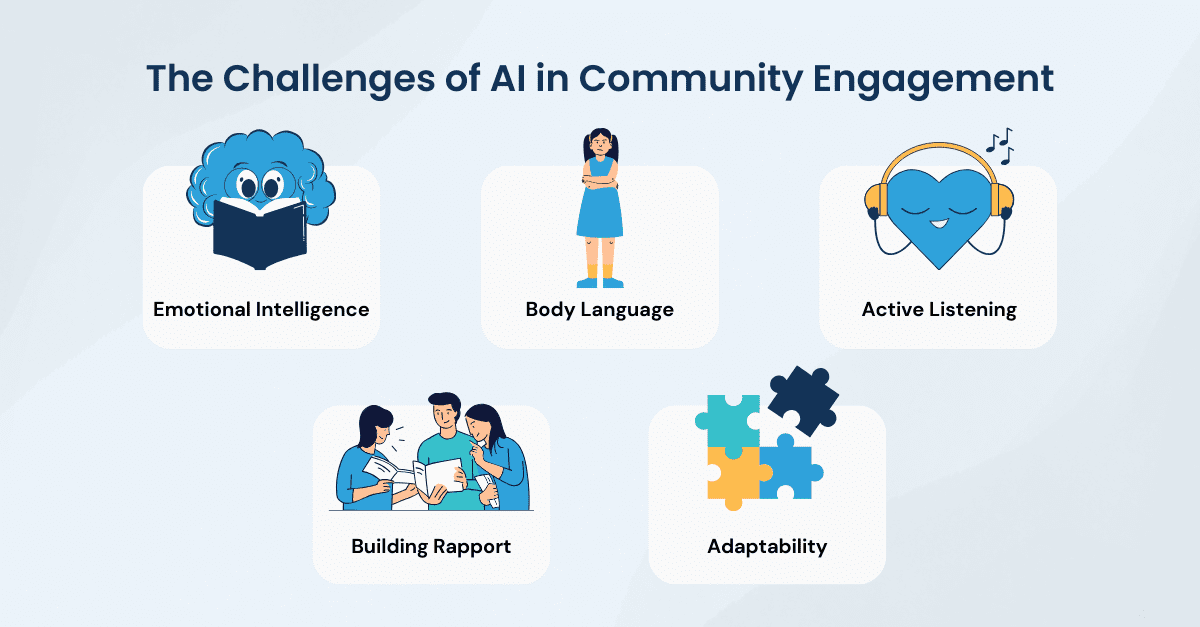
AI, however, lacks the human touch to create an authentic connection. While AI offers numerous advantages, it is important not to overlook the value of human interaction in building and maintaining thriving community engagement. Some key aspects that AI cannot fully replicate include:
Emotional Intelligence
Body Language
Active Listening
Building Rapport
Adaptability
1. Emotional Intelligence
Emotions hold significant importance in community engagement, particularly in handling sensitive or emotionally charged situations. While AI can replicate and simulate emotional responses to some degree through data and algorithms, it is unable to truly ‘feel’ emotions, as it lacks essential biological systems.
Humans, on the other hand, possess the ability to understand and empathize with emotions, making them better suited to navigate such situations than AI. This is why human interaction and moderation will always be valuable in community engagement, with support from AI to respond to more common comments and to flag areas of concern.
2. Body Language
Communication is more than just words. It also entails expressing our genuine emotions and thoughts through body language. In fact, body language contributes to over 90% of the information we convey. Nonverbal cues like gestures, mannerisms, facial expressions, and tone of voice also plays a crucial role in conveying meaning.
Despite AI’s diverse capabilities, it becomes more of a challenging task for it to understand elements like sarcasm. Humans, however, possesses the ability to interpret body language, which allows individuals to gain insights into others’ true feelings, enabling context-aware communication in various interpersonal interactions.
3. Active listening
While some AI models claim to have active listening capabilities, that’s obviously with the data that is shared. In a human situation, whether in a room or online, additional and off-topic comments can be as valuable as during a community engagement session.
4. Building Rapport
Genuine, human connections foster trust and relationships among community members, which in turn helps to create a supportive and engaging environment. Incorporating human intuition and empathy into community interactions can help Council’s to understand the needs and desires of their residents and effectively handle their concerns. In addition, genuine connections can contribute to a sense of belonging and strengthen the bonds that go beyond the capabilities of AI-driven communication.
5 Adaptability
Community engagement professionals can adjust more easily to unique circumstances by identifying and responding to the evolving needs and preferences of their communities. Individuals are able to cope with such situations with greater sensitivity by understanding and addressing the needs and concerns of their community members through personalised and tailored approaches through human touch in their involvement in the community.
Striking the Perfect Balance: AI and Human Collaboration
The integration of AI in community engagement poses challenges and opportunities. Achieving the optimal balance between AI and human interaction allows you to leverage the strengths of both, fostering a more efficient, supportive, and engaging environment for participants. With the correct approach, AI becomes a powerful tool that enhances, rather than diminishes, the distinctive human connections fundamental to any community engagement process.
However, it’s essential to use AI responsibly and ethically. In order to promote positive and integrated community engagement, it is essential that key factors be taken into account, such as data protection, avoidance of bias in artificial intelligence algorithms or the preservation of transparency in AI-driven processes. The potential of AI to improve the community’s involvement and strengthen connections with users is going to increase as it evolves.
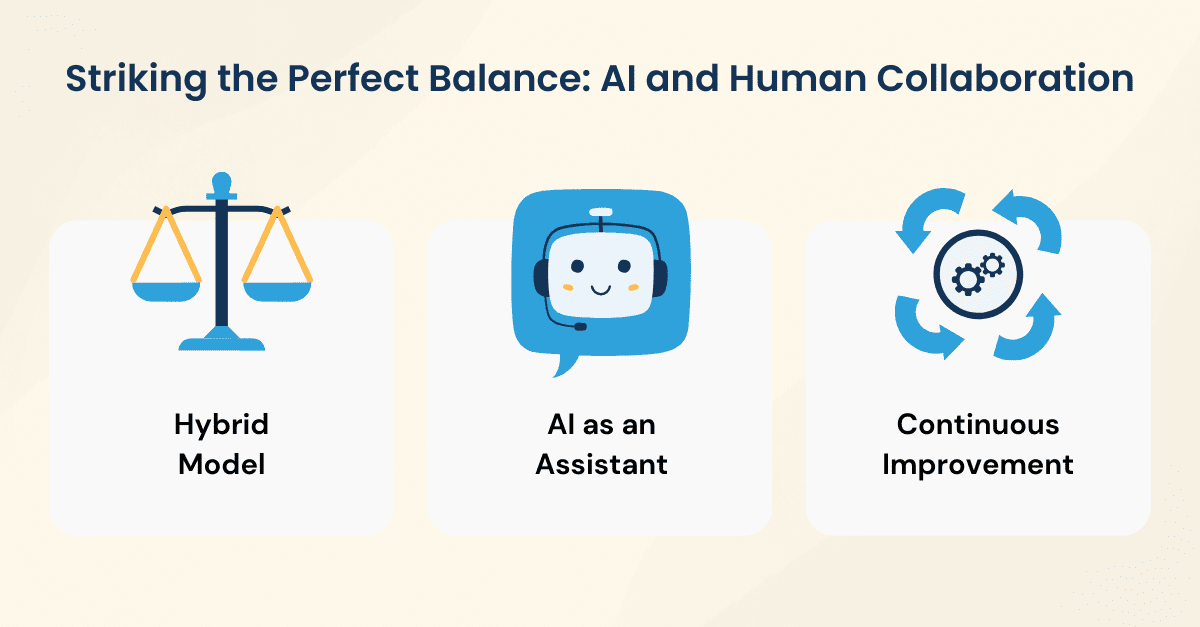
Achieving the full advantages of AI in online communities, while maintaining the human touch, hinges on striking the right balance between technology and human interaction. Here are a few ways you could strike this balance:
Hybrid Model
AI as an Assistant
Continuous Improvement
1. Hybrid Model
Employ a combination of AI-driven tools and humans for things like moderation and analysis. Use AI to handle routine tasks, such as basic moderation, sentiment analysis and answering FAQs, while reserving more complex or sensitive issues for human intervention. Social Pinpoint has a wide range of participation tools, including optional moderation levels and the ability to turn the assisted analysis on and off when needed.
2. AI as an Assistant
Artificial intelligence virtual assistants, like chatbots and ChatGPT, contribute to improved interaction between humans and AI, by utilizing data-driven insights to make better-informed decisions. Consequently, this can also help address concerns within communities and enhance a council’s community engagement strategy. To see how AI can help you, our team created a ‘ChatGPT Cheat Sheet for Community Engagement’ so you can get started on utilizing AI to streamline content creation.
3. Continuous Improvement
It’s important to regularly evaluate the performance of your AI tools and to make adjustments when necessary to maintain a harmonious balance between AI and human engagement. By doing so, you can ensure that technology will compliment and augment human capabilities rather than overshadowing the essential aspects of genuine community connection.
In summary, AI can serve as a valuable tool for aiding community engagement professionals with capabilities like data and sentiment analysis, communication automation, and to save you time. However, it is not likely that AI will replace community engagement. This is because within community engagement, authentic human touch and interactions remains essential for cultivating stronger relationships with residents, which is something that cannot be replicated by technology alone.